Media Releases2021-02-24T10:27:49+13:00

NEWS

Here are our latest media releases

Read more →
Young New Zealanders facing bowel cancer call for action as new report reveals gaps in care2025-11-19T17:40:43+13:00

New Zealanders under 50 are being diagnosed with bowel cancer too late, too often – and their voices reveal the human cost of delayed diagnosis

A new nationwide report from Bowel Cancer New Zealand has laid bare the reality of bowel cancer for younger adults – revealing widespread gaps in awareness, late-stage diagnoses, and the personal and financial toll of treatment during life’s busiest years.

Bowel cancer is the second-deadliest cancer in New Zealand – and the leading cause of cancer death among people under 50. Every year, around 3,300 New Zealanders are diagnosed and 1,200 die from the disease. Yet when caught early, it’s more than 90% curable.

The Never Too Young Report brings together the experiences of over 350 New Zealanders diagnosed with bowel cancer under the age of 50. Their stories highlight an urgent need for earlier detection, fairer access to testing, and greater awareness among both the public and healthcare professionals.

Launched as part of Bowel Cancer New Zealand’s Never Too Young campaign this November, the report forms the centrepiece of a nationwide awareness drive to challenge misconceptions that bowel cancer only affects older people. Alongside the data, it amplifies the real stories of patients under 50 whose experiences have inspired a call for change.

Key findings include:

  • Half of respondents did not know the symptoms of bowel cancer before their diagnosis.
  • Access to testing is inconsistent: 44.5% saw between two and five healthcare providers before being investigated, and 14% waited more than a year.
  • Late diagnoses: even with prompt colonoscopy, people under 50 are more likely to be diagnosed at a later stage than older patients.
  • 89% were working full- or part-time when diagnosed; 45% had to stop work temporarily (some later returning), and 52.5% were unable to continue working at the time of diagnosis.
  • Two-thirds reported ongoing fatigue, anxiety and/or depression, and many described a negative impact on body image, fertility and relationships.
  • If the national bowel-screening age was lowered to 45 years, one-third of respondents would have been eligible for screening – potentially leading to earlier detection and better outcomes.

“This report gives a voice to hundreds of New Zealanders who should never have had to fight this hard to be taken seriously,” says Peter Huskinson, Chief Executive of Bowel Cancer New Zealand.“Too many were told they were ‘too young’ for bowel cancer – and by the time they were diagnosed, it was advanced.”

Huskinson says the findings show major change is urgently needed to raise awareness of bowel cancer symptoms and ensure people of all ages are taken seriously when they seek help.

For Kiwis in their 20s, 30s and 40s, bowel cancer is the number-one cause of cancer death, and rates here are growing faster than anywhere else in the world. But until now, their voices have gone unheard – and the approach to prevention, diagnosis and care has lagged far behind the standard we rightly expect for other cancers.

“Currently, New Zealand has no clear strategy to address the public-health emergency of early-onset bowel cancer. This report provides an opportunity to change that – if our health leaders, policymakers and politicians will listen and act. There are improvements needed at every stage of diagnosis and treatment, but first we must act to prevent and detect this disease earlier. Our clinically backed, costed plan to begin screening at 45, shared with the Government earlier this year, would detect six in ten early-onset bowel cancers before symptoms develop – at an earlier, more treatable stage.”

Professor Frank Frizelle, Bowel Cancer New Zealand Medical Advisor and author of the report foreword, says the findings underscore how urgent action is needed to address delays and inequities.

“Early-onset bowel cancer is not a statistical anomaly – it’s a growing public-health issue demanding an urgent and coordinated response,” says Frizelle. “The experiences shared in this report reveal the human cost of delayed diagnosis and the moral imperative for change. We can and must do better for younger New Zealanders.”

Bowel Cancer New Zealand is calling for evidence-based action to improve outcomes for younger people – increasing awareness of bowel cancer symptoms, lowering the national screening age from 60 to 45 years, and ensuring faster, fairer pathways to diagnosis for anyone with symptoms. The organisation also stresses the need to deepen understanding of Māori and Pasifika experiences, so that responses are equitable and reflect the needs of all communities.

“Early diagnosis saves lives,” says Huskinson. “By listening to the voices in this report, we can make earlier diagnosis the norm – not the exception.”

Methodology

The Never Too Young Report is based on an online survey conducted by Bowel Cancer New Zealand between 5 September 2024 and 31 January 2025. The survey was open to people diagnosed with bowel cancer in New Zealand and was promoted through Bowel Cancer New Zealand’s website, social channels and partner networks. In total, 406 people took part, including 354 respondents diagnosed under the age of 50.

The Never Too Young Report is available at nevertooyoung.org.nz

Bowel Cancer New Zealand welcomes faster, simpler test for patients with symptoms2025-10-09T16:06:21+13:00

New pathway will speed up diagnosis, ease waiting lists, and save lives

Bowel Cancer New Zealand (BCNZ) is welcoming a new, fast and convenient way to test for bowel cancer symptoms – a change set to transform care for thousands of people across Aotearoa.

Currently, most people referred by their GP for investigation must undergo a colonoscopy. Under the new approach, patients instead receive a free at-home test – the faecal immunochemical test (FIT) – similar to the national bowel screening test. Results are returned within 14 days and help determine the right care for each patient.

The new pathway was confirmed by the Government as part of Saturday’s announcement on bowel screening expansion. Health Minister Simeon Brown said the FIT for Symptomatic programme is expected to “free up specialist capacity by prioritising colonoscopies for those at highest risk and reducing unnecessary referrals, leading to shorter wait times, faster diagnoses, and more resources to expand screening.”

The FIT for Symptomatic pathway means anyone of any age with bowel symptoms referred for specialist assessment can now quickly check their risk without needing to wait for a colonoscopy.

Three major potential benefits

The new approach is better for patients, for doctors, and for the health system:

  • For patients – More timely reassurance for the majority who test negative, reducing weeks of anxiety and avoiding unnecessary colonoscopies. This enables quicker access for everyone who does need the procedure, and ensures fast-track investigation for those identified to be at greatest risk.
  • For doctors – A quicker, simpler, highly effective tool to investigate symptoms and help rule out bowel cancer.
  • For the health system – Health New Zealand estimates the change has the potential to reduce the number of patients added to colonoscopy waitlists by 30 to 60 percent – a significant increase in capacity that supports both symptomatic patients and the expansion of the screening programme.
  • Patients who test negative but whose symptoms persist beyond six weeks will remain supported through a “safety-net” re-referral process.

Informed by evidence and patient voices

The new pathway was first recommended by a national taskforce of clinical leaders in 2022 and approved by New Zealand’s Clinical Governance Group in late 2024. FIT testing for patients with symptoms has been adopted internationally since 2017, with research showing it is highly effective at ruling out bowel cancer in symptomatic patients. Pilots in Waikato and Waitematā during 2022–23 confirmed the test is safe, effective, and equitable.

BCNZ role and rollout

BCNZ has worked closely with Health New Zealand as they developed this important change, providing feedback on plans and clinical protocols with input from patients and expert medical advisors. The charity has also contributed to the design of patient-centred communications to ensure the pathway reflects real experiences.

The new approach is already operating in Waikato and will be introduced in Counties Manukau, Waitematā, and Hawke’s Bay over the next two months, ahead of a nationwide rollout next year.

Together with the recent lowering of the screening age to 58, this change marks an important shift toward faster, fairer, and more accessible bowel cancer detection across Aotearoa.

What experts say

Dr Sue Crengle, general practitioner and medical advisor to Bowel Cancer New Zealand, said:

“As a practising GP I really welcome this change. We hope to see Health NZ complete this rollout as soon as possible so that from early 2026 accessible and equitable diagnosis is available for people in every community across Aotearoa.”

Peter Huskinson, Chief Executive of Bowel Cancer New Zealand, said:

“This change is an encouraging step forward. Faster reassurance, earlier diagnosis, and shorter waiting lists are all important for patients. We are looking to Health New Zealand to roll out these changes to all districts as soon as feasible. As long as funding for frontline services is maintained, this change will help address long waits for colonoscopy and help enable the Government’s 2023 pledge to match Australia’s screening age to finally be delivered.”

Notes:

  • FIT stands for faecal immunochemical test – a laboratory test which detects microscopic levels of blood in a tiny sample of a patient’s stool (poo).
  • Rollout: Waikato has been operating the new pathway since August 2025, with Waitematā, Counties Manukau, and Hawke’s Bay commencing over the next two months.
  • Under the FIT for Symptomatic pathway, patients with bowel symptoms referred by their GP are offered a FIT test to help assess their risk.
  • Around 80 in every 100 patients will return a negative FIT result and are considered highly unlikely to have bowel cancer. These patients are discharged back to primary care for ongoing management.
  • The test also identifies around 6 in every 100 patients tested as “high positive,” ensuring they can be fast-tracked for urgent colonoscopy. Others with positive findings are listed for colonoscopy within the recommended standard waiting time.
  • Some patients may bypass FIT and be referred directly to colonoscopy or specialist clinics depending on their symptoms.
  • The FIT pathway is expected to reduce the circa 33,000 non-urgent patients added to colonoscopy waitlists each year by 30–60 percent.
  • Almost 63,000 colonoscopies were performed in New Zealand in 2023, including just under 7,000 as part of the National Bowel Screening Programme.
  • The new pathway was recommended by Te Whatu Ora’s Planned Care Taskforce of doctors and health leaders in September 2022.

BCNZ emphasises the importance of:

  • Safety nets: Ensuring patients with ongoing or worsening symptoms after a negative FIT test are re-referred and monitored, to avoid any missed cancers, in line with international guidelines.
  • Equity monitoring: Publishing data on test return rates, pathway completion and outcomes to assure that Māori and Pasifika – who currently face poorer survival rates – are benefiting equally from the change.
  • Future improvements: Making tests available directly from GPs, which patients report would be faster and more convenient, as used in other countries. BCNZ’s 2025 GP survey found 68% of respondents said the test would be “very useful,” 15% “fairly useful,” and only 4% said it would not be useful.
  • Capacity planning: The Government must continue to maintain investment in colonoscopy capacity and workforce each year to meet demand from population growth and rising early-onset bowel cancer. This will ensure the starting age for screening can be reduced to 45 and earlier screening for Māori and Pasifika reinstated by using the freed-up capacity from the FIT symptomatic pathway change.
An important step forward, but bigger changes needed to save lives from bowel cancer2025-10-09T16:18:18+13:00

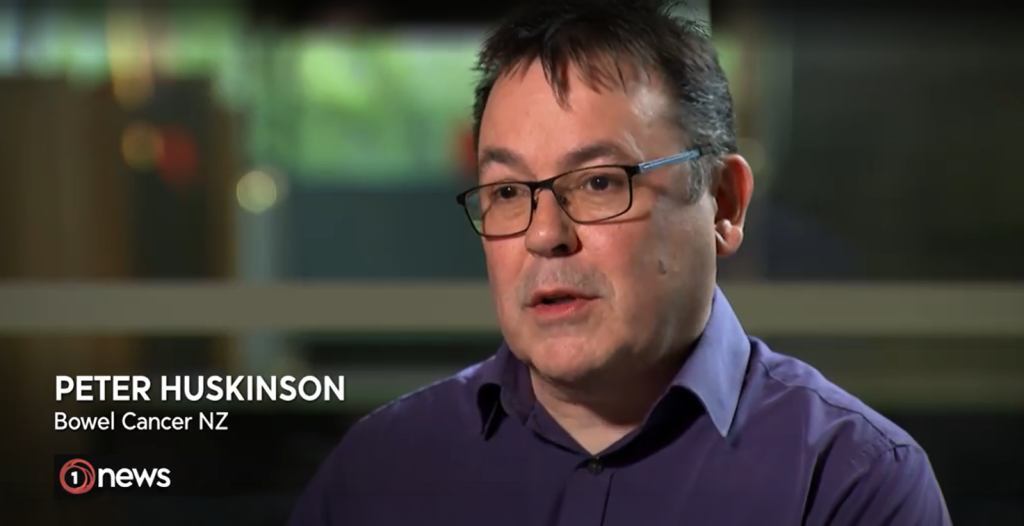
Bowel Cancer New Zealand Chief Executive Peter Huskinson spoke to 1News about the announcement – watch the interview here.

Bowel Cancer New Zealand (BCNZ) has welcomed the Government’s announcement that bowel screening will now be available from age 58, alongside the rollout of a new nationwide FIT for Symptomatic testing pathway – but says further action is needed to catch bowel cancer earlier and save more lives.

Bowel cancer is New Zealand’s second-deadliest cancer, claiming 1,200 lives every year – around 100 every month – despite being 90 percent treatable if caught early.

BCNZ Chief Executive Peter Huskinson says the announcement represents the first building blocks of meaningful progress, but more urgency is needed to match Australia and keep pace with rising early-onset bowel cancer.

“This is a welcome start, but we’ve clearly got to go way further if we’re going to keep pace,” says Huskinson.

“With the rising tide of early-onset bowel cancer, New Zealand is now the fastest-growing early-onset bowel cancer country in the world. This is affecting people in their 30s and 40s in particular – and we have to screen from 45.”

“The key is for the Government to commit to a date to complete the job of getting screening at 45. That way, the health system can plan for it.  Until there is a firm target it remains an aspiration without a plan.”

The new FIT for Symptomatic test is a free, at-home faecal immunochemical test that checks for microscopic traces of blood in a small stool sample – a potential early sign of bowel cancer. It allows anyone of any age who presents with bowel symptoms to quickly assess their risk without having to wait for a colonoscopy.

Findings from a pilot study in two districts of New Zealand showed the FIT test to be highly effective in helping rule out bowel cancer in people with symptoms. It provides faster reassurance for most patients and ensures those at higher risk are prioritised for colonoscopy. The pathway is already operating in Waikato, with rollout to Counties Manukau, Waitematā and Hawke’s Bay from October, and nationwide expansion expected in 2026, as confirmed by the Health Minister.

The FIT for Symptomatic pathway is also expected to reduce colonoscopy demand by up to 60 percent – creating the headroom needed to safely expand screening to younger New Zealanders.

Professor Frank Frizelle, colorectal surgeon and BCNZ medical advisor, says rising rates of bowel cancer among younger New Zealanders highlight why screening must start earlier.

“We’re seeing bowel cancer increase by around 26 percent every decade in people under 50 – and even faster among Māori, at around 35 percent. Screening younger is the best way to address that trend.”

Nearly a third of bowel cancer patients under 75 develop bowel cancer before they reach the current screening age, and for Māori it’s about half.

Huskinson says the combination of the FIT for Symptomatic rollout and the screening-age reduction gives the Government a strong platform to build on – and insists that equity must remain central to implementation.

“The systems are improving – now we need the urgency to match,” says Huskinson.

“With colonoscopy capacity increasing and FIT testing now freeing up specialists, there’s no reason to delay. If we lower the screening age to 45 and ensure earlier access for Māori and Pacific peoples, modelling shows we could catch up to 93 percent of cases before they develop. That’s a once-in-a-generation opportunity to save hundreds of lives.”

BCNZ is also calling for robust “safety-net” systems to ensure anyone whose symptoms persist after a negative test is re-assessed, and for outcomes data to be published to confirm Māori and Pacific peoples are benefiting equally from the change.

BCNZ says it looks forward to working with the Ministry of Health, Te Whatu Ora and the Minister to build capacity and ensure everyone in Aotearoa has timely, equitable access to lifesaving screening and diagnosis.

Government delay is costing lives – experts and families call for bowel screening at 452025-10-09T15:34:50+13:00

Latest episode of ‘Paddy Gower Has Issues’ exposes toll of New Zealand’s outdated screening programme

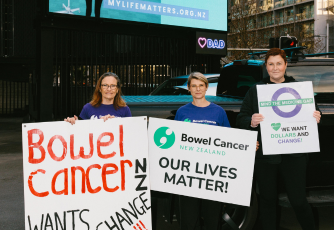
Bowel Cancer New Zealand (BCNZ) is calling on the Government to urgently lower the national bowel screening age to 45, following the latest episode of Paddy Gower Has Issues.

The programme shone a light on the devastating reality of bowel cancer, centred on the story of Aimee-Rose Yates – a much-loved BCNZ ambassador who died in July 2025, aged just 32. Diagnosed with stage 4 bowel cancer at 29, Aimee-Rose fought fiercely to ensure others would not be told they were “too young” for bowel cancer. In September 2023 on national television at the leaders’ debate she asked Christopher Luxon and Chris Hipkins “if elected will you lower the screening age to match Australia?” Both leaders agreed, with Christopher Luxon describing it as a day one priority.

Her husband Aaron Yates told the programme: “Aimee-Rose asked our leaders for this change, and they promised her. She isn’t here to see it, but I’m determined her fight won’t be in vain.”

Alongside Aaron, the episode also featured bowel cancer surgeon Professor Frank Frizelle – one of New Zealand’s leading experts in early-onset bowel cancer – BCNZ Chief Executive Peter Huskinson, and Cheryl Waaka – a former Black Fern and two-time Rugby World Cup champion from Northland, who is currently facing stage 4 bowel cancer. Together, their voices painted a stark picture of why urgent change is needed.

“New Zealand has one of the highest rates of bowel cancer in the world. It’s our second-deadliest cancer – but it doesn’t have to be. Ninety percent of cases are treatable if caught early,” says Peter Huskinson. “Every month, 300 people are diagnosed and 100 die. Public Health experts at Health New Zealand report that nearly half of those deaths are avoidable – yet our government remains unwilling to commit to any firm plans to meet its pledge.”

Professor Frizelle added: “We are seeing rising numbers under 50, with a third presenting late with advanced and often incurable disease. This changing pattern of disease needs a change in our screening process.”

Cheryl Waaka’s story underscored the reality of younger New Zealanders being diagnosed late, despite being otherwise strong and active. Her journey reflects the human cost of New Zealand’s delayed screening programme.

Promises still unmet

In 2024, a petition led by BCNZ ambassador Rachael Ferguson and signed by 13,000 New Zealanders called for screening to begin at 45. Despite a costed, clinically backed proposal presented to the health minister in March, the Government last month discharged the petition without action – leaving its election pledge to match Australia’s screening age “from day one” still unmet.

This followed the cancellation of a planned rollout of screening for Māori and Pacific peoples aged 50–60, which would have offered protection to more than 100,000 people. Even the Health Minister himself has acknowledged that the move to 58 is only “a step, but not enough.”

Rachael, diagnosed with bowel cancer at just 32, says: “13,000 New Zealanders asked for this change. We gave the government evidence, costs, and accounts of the real-life impact on families – and still nothing has happened. I’m not prepared to sit back and accept continuing delays.”

The case for change

  • Every month 300 Kiwis are diagnosed with bowel cancer and every month 100 people die of the disease– with 45 of those deaths avoidable
  • New Zealand has 410 excess deaths each year compared to Australia, which already screens from 45
  • Matching Australia’s screening age would mean one million more New Zealanders are eligible for screening protection. Current government plans to reduce the age only to 58 addresses just one tenth of this gap – and come at the cost of cancelling protection for 100,000 Māori and Pacific peoples aged 50–60
  • Māori and Pasifika are hardest hit, with significantly poorer survival rates
  • Screening detects cancers far earlier: 4 in 10 screening-detected cancers in New Zealand are Stage 1, compared to just 1 in 10 symptom-detected

A call to action

New ways to investigate people with symptoms to be introduced next month are expected to free up substantial colonoscopy capacity by 2026. Health NZ estimate this change will reduce colonoscopy demand for symptomatic patients by 30–60% – more than enough to enable screening at 45.

Bowel Cancer New Zealand says this creates a real opportunity for New Zealand to close the gap with Australia and save lives – but only if Government commits to a clear timeline for screening at 45. If not, the opportunity may be lost.

“With the evidence in front of us, there is no reason to wait,” says Huskinson. “Screening earlier will save lives, reduce costs, and help close a shameful survival gap faced by Māori and Pacific peoples. What we need now is action.”

BCNZ is asking New Zealanders to:

  • Share the documentary to raise awareness
  • Learn the symptoms of bowel cancer and talk to your GP if something doesn’t feel right
  • Contact your local MP and call for screening at 45 – you can use our letter template here

Get regular updates on this campaign by signing up at bowelcancernz.org.nz

Bowel Cancer NZ meets with Health Minister to press for action on screening from age 45 and post-treatment exercise programme2025-09-26T10:10:11+12:00

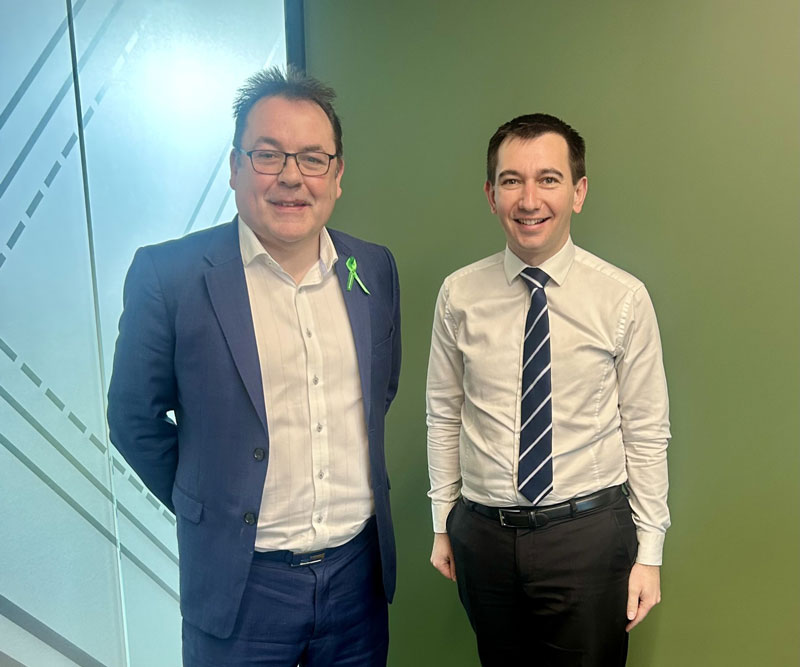
Bowel Cancer NZ Chief Executive Peter Huskinson pictured with Hon. Simeon Brown at the Auckland Policy Office.

Bowel Cancer New Zealand met with Hon Simeon Brown last week to push for two life-saving measures: lowering the national bowel screening age and introducing a supported exercise programme after chemotherapy.
The meeting was constructive, with the Minister outlining work taken in response to the charity’s screening proposals put to him in February. Work is now underway on both measures – but screening timelines remain unclear.  A further meeting later this year was agreed.


Work on screening age progressing – but no plan yet

Bowel Cancer NZ reiterated its costed proposals, first presented to the Minister in February, showing how the Government can deliver on Prime Minister Christopher Luxon’s 2023 pledge to match Australia’s screening age of 45. The plans are achievable, affordable, and reinstate earlier screening for Māori and Pacific peoples – groups with worse survival rates under the current one-size-fits-all approach.
The Minister confirmed that improvements in investigations for people with symptoms are rolling out from this month – a key enabler for lowering the screening age. He acknowledged that moving to 58 is only a step on the journey, describing it as “a step, but it’s not enough” – signalling the Government recognises the need to go further.


Bowel Cancer NZ Chief Executive Peter Huskinson said:
“It’s encouraging that our proposals are being taken seriously – but we need solid timelines. Every month that goes by, more than 50 Kiwis in the age group that can access screening in Australia are diagnosed with bowel cancer.” 
The minister stated that modelling to inform next steps is not expected until late 2025 or early 2026, leaving little time to implement changes before the next election.
Under BCNZ’s proposals, screening from 45 could be implemented swiftly, with earlier eligibility for Māori and Pacific peoples reinstated. Without this, stark inequities remain, with many people developing bowel cancer before reaching the current starting age of 60.


Ball rolling on major survival gains through exercise after chemotherapy

Bowel Cancer NZ also presented evidence from the landmark CHALLENGE trial, which shows that a structured behaviour change and exercise programme after chemotherapy increases eight-year survival rates by 7% for Stage 2 and Stage 3 patients – saving more than 50 lives each year in New Zealand.
“This is one of the biggest survival gains we’ve seen in years,” said Huskinson. “It’s highly effective, highly affordable, and could be rolled out nationwide within 12 months. We want to see the Government champion this and make it standard care.”
The Minister responded positively, asking officials to provide further advice and inviting BCNZ to meet with the Ministry of Health and Health New Zealand to discuss modelling and next steps.


Next steps

The meeting ended with a commitment to meet again.
“Many New Zealanders are frustrated and rightly want faster action. We share those concerns and will keep pressing the case for change,” said Huskinson. “Kiwis facing the impact of bowel cancer don’t have time to wait. Every month matters, and we’ll keep advocating until these life-saving measures are delivered.” 

Bowel Cancer NZ will continue working to ensure all New Zealanders benefit from timely equitable screening, high-quality treatment, and innovative post-treatment care – to work towards a future where no life is lost to this disease.

New revelations cast further doubt on bowel screening decision2025-03-20T14:37:29+13:00

Pictured: Health Minister, Simeon Brown. Credit: RNZ

Just over a week ago, a few days after meeting with us, Health Minister Simeon Brown announced the Bowel screening age would drop by two years from age 60 to age 58. 

At the time we said this advance for just over 100,000 people was only one tenth of the screening protection promised to a million kiwis by the prime minister as a 'day one' priority. 

There was worse to come.  This wasn't 100,000 additional people covered.  It was a switch out of one group of people for another trading the protection of 100,000 Māori and Pasifika aged 50-58 by repurposing money allocated to them – a huge setback for equity. 

There were some measures to increase screening uptake for those over 58.  Barcoding screening kits so they can be given out by GPs, at health events, and by community outreach teams is welcome, as is the option to drop your completed test at your local laboratory collection centre, and funding for promotional campaigns to reach communities with low uptake.   These might reasonably be expected anyway, given the screening programme is far from the government's target of 60% for Māori & Pasifika 

Last Friday new revelations emerged from within a stack of twelve documents – briefings and reports – relating to the cabinet's decision running to 99 pages.  

Even having decided to renege on the commitment to Māori and Pacific communities for protection at age 50, there was still an option that would save 678 lives.  Screening Māori and Pasifika 2 years earlier than the general age of 58.   It was within budget.  And it was recommended, along with increasing screening uptake, in advice commissioned from world leading experts. 

And the government rejected it in favour of a one-size-fits-all screening age that neither officials nor experts, nor doctors favour.  An approach that saves 112 fewer lives over the next 25 years.  And all 112 of the additional families set to lose a loved one because this option was rejected are Māori and Pacific.   

Peter Huskinson, Bowel Cancer NZ's chief executive shared the dismay expressed by doctors and community leaders,

"It's deeply concerning that when presented with two affordable options the Minister has not chosen the one that would save more kiwi lives" 

So where now? 

When the prime minister came into office, New Zealand was ten years behind Australia's screening age.  Under current plans he will complete his term 13 years behind.  That would be a catastrophic outcome, a broken promise that costs hundreds of lives. 

Interviewed by RNZ at the weekend, Health Minister Simeon Brown put his own credibility on the line to deliver on the prime minister's pledge: 

"We will lower that age as we can, as quickly as we can.  We are committed to matching Australia.  The critical restriction to enable that is access to more colonoscopies.  As colonoscopy access increases we will continue to lower that age"   

With major changes in clinical practice set to free up more than enough capacity to match Australia's screening age over the next year, how the minister seizes on the opportunity for bold action will be the acid test of his credentials.   Every day of delay means more lives lost. 

We will continue to playing our part in realising this vital change and not rest until all communities enjoy the full protection from bowel cancer that our neighbours across the Tasman already experience. 

Have you or a loved one been affected by a late bowel cancer diagnosis due to screening age limits? Your story matters—share it here https://bit.ly/share-your-BC-journey  

Screening Age Announcement Leaves Prime Minister’s Promise 90% Unmet2025-03-06T17:40:22+13:00

Five hundred days ago, Christopher Luxon pledged that if elected, his government would prioritize matching Australia’s bowel cancer screening age from day one. This commitment would extend protection to over a million more Kiwis against the country’s second deadliest cancer.

Last week, Bowel Cancer New Zealand presented proposals to the Health Minister, detailing how parity with Australia – which screens from age 45 – could be fully achieved. The proposals also outlined how to ensure equitable screening access for Māori and Pacific communities, who face bowel cancer risk a decade earlier.

Today’s announcement by government to lower the screening age from 60 to 58 will provide access to around 120,000 New Zealanders. However, this decision leaves over 900,000 Kiwis without the protection that is standard care across the Tasman. Additionally, more than 100,000 Māori and Pasifika, who were set to gain access from age 50 under previous government plans, are now excluded – marking a step backwards for health equity.

It is indefensible for more Kiwis to continue losing their lives to this preventable, treatable disease. Screening is a simple, cost-effective solution that saves lives.

Bowel Cancer NZ Chief Executive Peter Huskinson said:

“Today’s change will help save 566 lives over the next 25 years, but New Zealanders will experience 400 excess bowel cancer deaths every year compared to Australia. We urge the government to continue working with us on a more ambitious roadmap that protects all communities equally and fulfils the prime minister’s pledge. Going further and faster is operationally feasible, financially affordable, and essential to stem the tide of preventable deaths.”

Debbie Bailey

Pictured: Debbie Bailey.

When the news broke that the government would only lower the screening age to 58, many patients who had been diagnosed younger were left feeling frustrated and overlooked. Among these is Debbie, who was diagnosed with bowel cancer at 50 through a private colonoscopy. She said,

“It’s just not good enough. If I’d been screened at 45, it would have been picked up at an earlier stage and given me a better outcome. I can’t believe it’s only gone to 58.”

Bowel Cancer NZ Meets New Health Minister to Discuss Screening from 452025-03-19T14:51:38+13:00

Bowel Cancer Chief Executive, Peter Huskinson pictured outside the health minister’s Auckland policy office.

Hon Simeon Brown invited Bowel Cancer New Zealand to meet and discuss how to combat New Zealand’s second biggest cancer killer.  The charity outlined how New Zealand could extend screening protection to all Kiwis from age 45 in line with the ‘day one’ election pledge made by Prime Minister Christopher Luxon in October 2023.    

Bowel Cancer NZ Chief Executive, Peter Huskinson said

“We were delighted to have the opportunity to present a workable way forward.  The current late starting age – screening from 60 – means that one third of all Kiwis under 75 who get Bowel Cancer, and half of Māori, are not protected by screening.  Health New Zealand is due to implement other changes later this year which will free up substantial ongoing capacity for screening and surveillance, creating a window of opportunity to act.” 

 Under Bowel Cancer New Zealand’s proposals 12 in every 13 Kiwis would be eligible for protection ahead of the age they are likely to develop the disease, with Māori & Pasifika equally protected through a ten year earlier starting age.  Research shows this will annually prevent more than 350 Bowel Cancer cases, avoid over 75 cancer deaths, and detect over 75 more cancers at an earlier more treatable stage. 

 “It was a constructive meeting” said Huskinson.  “We are grateful to the Minister for prioritising time with us in his first few weeks in post.  The sooner we can reduce the starting age, the sooner we can save lives.   Twenty-three Kiwis are dying every week from Bowel Cancer – almost half of those deaths are preventable.”   

Bowel cancer NZ Chairman Stefan Corbett agrees.  Stefan was 47 years old when diagnosed with stage 3 Bowel cancer and could have been diagnosed two years earlier if screening had started at 45. 

“Whānau devastated by this disease do not have time to wait.  The new Minister now has the chance to deliver on the Prime Minister’s promise and commit to an implementation date.  Once this is in place, we will continue to work closely with policy makers and health sector leaders to make it happen” 

Our Medical Advisor Headlines in TIME Magazine!2025-02-17T13:50:19+13:00

We are immensely proud to announce that our esteemed medical advisor, Professor Frank Frizelle, has been featured in a TIME Magazine cover story for his groundbreaking research into the alarming rise of cancer among young adults. The article, titled “The Race to Explain Why More Young Adults Are Getting Cancer,” delves into the critical work being done to understand this concerning trend.

In 2014, Professor Frizelle treated a woman in her late 20s diagnosed with bowel cancer—a rarity given her age. The situation took an unexpected turn when her best friend, experiencing similar symptoms, was found to have a precancerous lesion. Reflecting on this pivotal case, Professor Frizelle remarked,

“That really brought it home to me—how it’s much more common than you think.” 

Initially sceptical about the prevalence of such cases, Professor Frizelle conducted extensive research and discovered a significant increase in colorectal cancer diagnoses among individuals under 50 in New Zealand. Further studies in Sweden and Scotland revealed a similar trend, indicating a global pattern. 

The TIME article explores various theories behind this rise, including lifestyle factors like diet, environmental exposures such as microplastics, and alterations in the gut microbiome. Even prenatal conditions are being considered. Researchers are employing advanced techniques, including artificial intelligence, to unravel the complex causes of this concerning trend. 

Professor Frizelle’s dedication to this cause is further exemplified by his role as a leading medical advisor for Bowel Cancer New Zealand since 2015. His commitment to understanding and combating bowel cancer has been instrumental in driving research and awareness initiatives nationwide.  

His commitment to understanding and combating bowel cancer has been instrumental in driving research and awareness initiatives nationwide. 

We encourage everyone to read TIME Magazine’s article to gain deeper insights into this pressing issue and to join the conversation. You can find it here: The Race to Explain Why More Young Adults Are Getting Cancer 

Community Gathers to Address Colonoscopy Delays in Palmerston North2025-02-10T13:20:50+13:00

In December, 852 MidCentral patients received letters informing them that their regular colonoscopy procedures would be on hold indefinitely. For many, this decision is devastating. As Malcolm Mullholland, a patient advocate affected by the pause, put it,  

“When I received the letter, I felt sick. I felt sick because I knew this decision would lead to people dying.”

Patient Voice Aotearoa chairperson Malcolm Mulholland.

This pause has left hundreds of individuals in limbo, uncertain of when they will be able to access life-saving surveillance colonoscopies. For many, these checks are essential for the early detection of bowel cancer, New Zealand’s second deadliest cancer. 

After public outcry, Te Whatu Ora has announced the resumption of surveillance colonoscopies for a small group of 45 patients at Palmerston North Hospital from February.  

However, this still leaves over 800 patients still waiting for their life-saving procedure. As Bowel Cancer NZ Medical Advisor Prof. Frank Frizelle expressed,  

“With bowel cancer, the earlier you find it, the more likely you are to survive. But also, practically, the cheaper it is to treat... This is part of the cost-cutting or cost restrictions that are coming on. They need to think about the patient at the end of it, because one of the key goals of Te Whatu Ora is to improve patient care, and they’re not even maintaining patient care.

In response to the ongoing delays, Patient Voice Aotearoa has organised a public meeting in Palmerston North at the Globe Theatre on Tuesday, February 11, at 7pm. The aim is to come up with solutions for those whose colonoscopies have been delayed.  

Bowel Cancer NZ will be there to support this community. Our nurse, Victoria, will be attending to stand in solidarity with those still waiting for their procedures. 

” As the nurse for Bowel Cancer NZ I am very concerned that so many people will potentially be missing out on vital screening and surveillance. While it is confirmed that a small number of those who have waited an excessive amount of time is good and very welcome for those who can access them, it does leave many still waiting and no definite plans in place to rectify the problem.  

I will be coming along to the public meeting to stand with those who are affected by this ‘pause’ in life saving screening, and to join our voice with those still waiting” 

Te Whatu Ora has committed to reviewing waitlists monthly, with an update expected in May. But for those waiting, every delay matters. We urge the government to prioritise patient care and reinstate these vital colonoscopies immediately. 

Scammer Alert2025-02-03T12:27:30+13:00

We have been made aware that someone claiming to be from Bowel Cancer NZ is contacting people with a phone survey around personal bowel habits.   

Bowel Cancer NZ is NOT doing a survey on this or anything else currently.  We have reported the incident to the national cyber security centre.   

If you are contacted, don't answer any questions.  Hang up.    

You can get help from https://netsafe.org.nz/ and if you let us know via info@bowelcancernz.org.nz we will keep the authorities informed.   

Your safety and security is paramount to us.  

If we at Bowel Cancer NZ ever do a survey, we always communicate about it first via our website, bottom lines newsletter, and social media.  And we will never call you to ask for bank details.    

If you ever receive a call claiming to be from BCNZ please do feel free to hang up and call us back on the free numbers listed on our website so you can verify it is us. 

Cancer screening cut decision ‘certain to cost Kiwi lives’2024-12-16T14:37:07+13:00

Bowel Cancer New Zealand (NZ) is concerned by the sudden decision to end bowel cancer screening for 50 to 60-year-old Māori and Pasifika communities in the Waikato, Tairāwhiti, and MidCentral regions. The move raises serious questions for New Zealanders about the government’s delivery on reducing bowel cancer-related deaths.

The government’s apparent decision to cancel this critical screening programme is in stark contrast to Prime Minister Luxon’s pre-election commitment to lower the national bowel screening age to 45, in line with Australia’s screening policy. This change puts lives at risk and is hard to reconcile with the government’s repeated emphasis on the need for earlier, more equitable access to screening.

Peter Huskinson, Bowel Cancer NZ Chief Executive, says,

“It is hard to fathom how a programme that has been fully funded for the entire country since 2022 and is proven to save lives would be abruptly cancelled – especially without a formal statement in the House. This decision is even more puzzling considering the government’s own estimates, which state that this screening programme, once nationwide, is expected to save 44 lives each year.

“Dr Reti and Christopher Luxon have both previously expressed a clear commitment to addressing bowel cancer screening inequities, so it is hard to understand why they would allow such a reversal. This decision, if confirmed, will mean unnecessary suffering and deaths for our Māori and Pacific communities. Deaths that could have been prevented with proper screening at the right age.”

In response to this decision, Bowel Cancer NZ is calling for immediate clarification and urges the government to explain who made the decision and the rationale behind it. New Zealanders deserve to know why such a vital screening programme has been put on hold.

Huskinson says, “We want to see a moratorium on the withdrawal of this programme until the government provides full clarity on its position. Families deserve to know they are not facing higher risks from undetected cancer during this critical period of uncertainty.”

Bowel Cancer NZ medical advisor Professor Sue Crengle says,

More Māori and Pasifika bowel cancer is diagnosed before age 60 years. As a result, these groups had less opportunity to benefit from bowel cancer screening than other ethnic groups. Starting screening for Māori and Pasifika people at age 50 years meant that the benefit from the programme was equal across all ethnic groups. It would be incredibly disappointing if this has been stopped.”

Significant drug funding milestone for cancer patients2024-11-01T11:06:26+13:00

Today marks a significant milestone with the funding of cetuximab (branded as Erbitux) for advanced bowel cancer patients with left-sided, RAS wild-type and BRAF wild-type, metastatic colorectal cancer (mCRC).

This development comes after tireless campaigning by Bowel Cancer NZ and patient advocates who had to set up Givealittle pages to finance this life-extending drug in the absence of government funding. Many patients courageously fought for its accessibility, even knowing that it may be too late for them.

The Chief Executive of Bowel Cancer NZ, Peter Huskinson, says, “Today’s announcement is a testament to the unwavering strength and determination of our bowel cancer community. Patients and their families have shown incredible resilience, advocating for a treatment they believe can change lives. We honour the memory of those who fought bravely and have since lost their lives, and we remain committed to ensuring that bowel cancer patients’ voices are heard.”

Pharmac anticipates that about 380 patients will benefit from cetuximab in the first year of funding. This includes 140 people who have not received any prior treatments for metastatic disease and 240 individuals who have received one or more previous treatments. In addition, they understand that around 60 people privately funding cetuximab could move into the publicly funded setting.

Huskinson says, “The funding of this new bowel cancer medicine is a vital step forward, but the journey is far from over. There remain patients with other forms of advanced disease who are not yet getting treatments that PHARMAC has long since assessed as cost-effective. Therefore, Bowel Cancer NZ continues to call for cetuximab to be extended for BRAF-mutated metastatic colorectal cancer in combination with encorafenib and for bevacizumab (Avastin) to be funded, which has been on the Medicine Waiting List for fourteen years.

“All around the world, patients, doctors, funding agencies, governments and pharmaceutical suppliers are doing better at reducing the delay in the availability of effective medicines through prompt assessment, responsible pricing, and timely appropriation of public funds. Lives depend on it. We want what all Kiwis want for our loved ones – not to miss the chance for the best survival outcomes and additional months and years of life. We urge the government and the health sector to work to make this the start of a new era rather than a one-off belated catch-up.

“In the meantime, we encourage all those affected by bowel cancer to seek support and to stay informed about new treatment options. Together, we can continue to push for advancements that save lives and improve the well-being of our community,” says Huskinson.

Charity announces new Chief Executive2024-10-30T11:58:37+13:00

Bowel Cancer New Zealand (NZ) is pleased to announce the appointment of Peter Huskinson as the new Chief Executive.

Chair of the board Stefan Corbett said, “We are delighted to welcome Peter to Bowel Cancer New Zealand. His extensive health sector leadership experience and his passion for extending better prevention and care to all communities will be a great asset to us as we work to beat New Zealand’s second biggest cancer killer”.

Huskinson, a masters trained health economist, has served for two decades as a senior health leader in New Zealand and the UK, leading a regional public sector health organisation serving 4 in 10 New Zealanders. He has delivered successful initiatives to strengthen and redesign cancer services for patients as well as improve access to timely care. In the UK, Huskinson worked to secure nationwide access to innovative new medicines for cancer and rare diseases.

Huskinson said, “I am delighted to be joining at such an important time. 90 per cent of Bowel cancers are treatable if caught early, and adopting advances in early diagnosis in New Zealand can save hundreds of lives. I’m looking forward to working with bowel cancer patients, whānau, survivors and healthcare professionals to realise these gains.   

“Whether you are one of the 65 Kiwis who received a bowel cancer diagnosis this week or have been living with the impact of cancer for months or years, a growing range of free help and support is available from Bowel Cancer New Zealand. It is a privilege to be able to serve you and stand with you.”

Charity concerned by slow screening rollout for Māori and Pasifika2024-10-25T08:08:33+13:00

Bowel Cancer New Zealand (NZ) is pleased to learn the National Bowel Screening Programme has
distributed over two million home-screening kits across Aotearoa, picking up 2,495 cancers.

However, the charity is concerned about the extremely slow screening rollout to 50 years for Māori
and Pasifika. The government announced this initiative would be launched and trialled in selected
regions in the latter half of 2022 with a more extensive rollout from July 2023.

Funding of $36 million was announced in Budget 22 to lower the eligible start age for bowel
screening from 60 to 50 years for Māori and Pacific people to address a health inequity. So,
questions are being raised on why Te Whatu Ora Waikato, Te Whatu Ora Tairāwhiti, and Te Whatu
Ora Midcentral are the only regional health authorities inviting Māori and Pasifika from 50.

Professor Sue Crengle, a Bowel Cancer NZ medical advisor, says, “It’s extremely disappointing that in
over 18 months, there have only been three districts screening Māori and Pasifika from 50.”

A higher proportion of bowel cancer occurs in Māori and Pacific peoples before they reach 60
(58% Māori females vs. 27% non-Māori females, and 52% Māori males vs. 29% non-Māori).

Health Minister Shane Reti said, “When you start particular sub-sections of a screening programme,
there are particular requirements you have to have. It’s different from actually doing a nationwide
rollout. So, we’re still learning, still understanding where the sweet spot for screening for Māori and
Pasifika is particularly.”

Bowel Cancer NZ is critical of the Minister of Health’s statement since the government has
previously outlined it would trial how best to achieve a high participation rate from May 2022 to July
2023.

Crengle says, “Bowel Cancer NZ wants to know whether Te Whatu Ora: Health New Zealand plans to
complete this rollout urgently or whether it was just a token effort in three regions. Action is needed
as far too many Māori and Pasifika are dying that could have a fighting chance if they were screened
from 50.”

A clear timeline and accountability are needed from Te Whatu Ora: Health New Zealand to prevent
this health inequity from continuing.

Relief as new bowel cancer drugs announced2024-07-24T13:24:48+12:00

Years of advocacy from Bowel Cancer New Zealand (NZ) and other groups calling for new bowel
cancer drugs has led to a funding announcement from Pharmac for two new medicines, cetuximab
(Erbitux) and pembrolizumab (Keytruda).

Rebekah Heal, general manager of Bowel Cancer NZ says, “This is fantastic news and
acknowledgement of all the hard mahi by our bowel cancer community. We celebrate this milestone
while also acknowledging all those who bravely fought alongside us and aren’t here today.”

After pressure from patients and advocacy groups, the government delivered on the promised
funding boost for Pharmac, with an extra $604 million guaranteed over the next four years towards
54 new drugs.

“There’s no doubt it’s a relief to see these drugs announced as they will be the first bowel cancer
medicines funded in over 20 years. This will help relieve some of the enormous financial burden so
many bowel cancer patients are shouldering. It’s also evident just how underfunded Pharmac has
been until now,” says Heal.

Keytruda will be available from October 1st as a funded treatment option for Lynch Syndrome bowel
cancer patients. A date has yet to be set for cetuximab, although it was listed as one of the drugs to
be funded in the next year.

While cetuximab will be funded, this does not currently include bowel cancers with the BRAF
mutation. Bowel Cancer NZ wants to see funding extended and expedited for patients with this
mutation, like Blair Vining, who passed away in 2019.

Cancer advocate Melissa Vining says, “For many patients like Blair with a BRAF mutation, this is
heartbreaking news. Facing an aggressive form of cancer with no publicly funded drugs available
leaves you with several choices: leave NZ to obtain treatment in Australia, fundraise for the
treatment, sell your home if you have one or wait to die knowing that if you lived in a comparable
country like Australia, your treatment would be funded. This takes an incredible toll on many New
Zealanders who simply deserve a fair chance at treatment.”

This progress in funding bowel cancer drugs is encouraging, but there’s still more to be done.
Bowel Cancer NZ continues to advocate for bevacizumab (Avastin), which has been on the
Medicine Waiting List since 2010.

Broken drug funding promise2024-06-06T09:16:49+12:00

Open Letter to Prime Minister Christopher Luxon and the Minister of Finance Nicola Willis

Dear Prime Minister Christopher Luxon, Minister of Finance Nicola Willis, and Associate Minister of Health (Pharmac) David Seymour.

In August last year a promise was made to fund 13 new cancer medicines via a $280 million ring-fenced fund to Pharmac. According to the National election manifesto, that fund was to start on July 1 this year by reinstating the $5 prescription fee.

As you stated, Prime Minister, those 13 medicines are “for lung, bowel, kidney, melanoma, and head and neck cancers that provide significant clinical benefits and are funded in Australia but not in New Zealand. Under National, New Zealanders will not have to leave the country, mortgage their home, or start a Givealittle page to fund potentially lifesaving and life-extending treatments that are proven to work and are readily available across the Tasman.”

Cancer patients and advocates sat in disbelief when the budget was announced. We have now learnt that those 13 medicines may not be funded for at least a year. Patients don’t have a year to wait and will sadly have to look at all the heartbreaking scenarios your party wanted to put an end to. Bowel cancer patients have already been waiting for 22 years, the last time a new medicine was funded to treat them.

Prime Minister you also stated, “Almost every New Zealander will have some experience with cancer in their lifetime – either personally or through a friend, colleague or loved one.”

We know many New Zealanders voted for you because you stated you would fund the new cancer medicines. They are devastated that you have not honoured this commitment of all the commitments you made. Unlike other promises, lives will be lost if these medicines are not funded.

We implore you to make good on your commitment to fund these 13 medicines with the utmost urgency. As you may also know, no blood cancers and certain solid tumour cancers, like breast and prostate, are not catered for in the list of 13 medicines.

We welcome the opportunity to work with you to address New Zealand’s medicines crisis that sees hundreds of thousands of Kiwis miss out on medicines that are funded in most other developed countries. But for now, let’s make a start and see you deliver on your commitment to fund those 13 cancer medicines.

On behalf of the following cancer organisations:

  • Bowel Cancer New Zealand 
  • Patient Voice Aotearoa
  • Breast Cancer Foundation
  • Cancer Society
  • Breast Cancer Aotearoa Coalition
  • Leukemia and Blood Cancer New Zealand
  • Lung Foundation New Zealand
  • Melanoma New Zealand
  • Prostate Cancer Foundation New Zealand
  • Gut Cancer Foundation New Zealand
  • Brain Tumour Support New Zealand
  • Head and Neck Cancer Support Network New Zealand
  • Ovarian Cancer Foundation New Zealand
  • Myeloma New Zealand
  • Talk Peach.
     
Take action this Bowel Cancer Awareness Month2024-05-22T17:02:32+12:00

Bowel cancer is the second highest cause of cancer death in New Zealand, with over 1,200 people dying each year, as many as breast and prostate cancer combined. June is Bowel Cancer Awareness Month, so Kiwis are urged to learn the symptoms and take action this winter.

“We are losing far too many loved ones to this disease every year, and we shouldn’t be. Bowel cancer is curable in 90% of cases if caught early enough. Early detection and prevention are key, and that’s why our focus this June is symptom awareness,” says Rebekah Heal, General Manager at Bowel Cancer New Zealand (NZ).

The inspiration behind the Bowel Cancer Awareness Month campaign this year is Naomi Argyle, 45, a stage 4 bowel cancer patient given weeks to live. Naomi wants to see people act on their symptoms and get checked.

“I feel like I have to shout it from the rooftops, making noise so that if just one other person like me will go and get checked, and jump up and down if you have symptoms to get tests,” says Naomi.

This June, there will be symptom awareness posters in shopping mall bathrooms, street posters, on major billboards, and on the backs of buses nationwide. Bowel Cancer NZ will also be at Fieldays and the upcoming General Practitioners Conference to help get the word out.

“Telling my girls was the worst thing I have ever done in my life… That’s what’s making me want to shout about this when I still can – to stop other families having to go through this,” says Naomi.

Bowel Cancer NZ has developed an online symptom checker, which 1,500 Kiwis utilised last year. The charity also has awareness resources available to download and order via their website.

“We hope Kiwis take action this June and help us make some noise for Naomi. Know the symptoms, get checked and help raise money for this important cause,” says Rebekah Heal.

Visit bowelcancernz.org.nz/awareness-month to:

  • Do the online symptom checker.
  • Host an awareness event.
  • Advocate for lowering the screening age and for new bowel cancer medicines.
  • Set up a fundraiser to help beat bowel cancer.
  • Donate to fund this vital mahi so fewer lives are lost to this silent killer.

Bowel Cancer NZ is a nationwide, patient-focused charity dedicated to reducing the impact of bowel cancer in our communities through awareness, education, advocacy, research, and patient support.

Bowel cancer symptoms include:

  • Bleeding from the bottom or seeing blood in the toilet after a bowel motion
  • Change of bowel motions over several weeks without returning to normal
  • Persistent or periodic severe pain in the abdomen
  • A lump or mass in the abdomen
  • Tiredness and loss of weight for no particular reason
  • Anaemia.
CANGO response to Pharmac funding2024-05-22T17:16:02+12:00

 Associate Health Minister David Seymour’s announcement of an additional $1.774 billion to address Pharmac’s deficit over the next 4 years is a good first step to ensure Kiwis continue to have access to existing funded medicines. 

Although this is Pharmac’s biggest budget ever, significantly more is needed; as incremental change will not address medicines currently sitting on the options for funding list, considered standard of care in other countries or New Zealand sitting at the bottom of the OCED for medicine access. 

We remain hopeful that the additional investment in Pharmac’s budget is only the first step in the Minister Seymour’s commitment to the transformational change that New Zealanders need, to ensure access to life saving pharmaceuticals. 

About CANGO: 

CANGO (Cancer Non-Governmental Organisations) is an alliance of prominent New Zealand cancer charities including: 

  • Bowel Cancer New Zealand 
  • Breast Cancer Foundation NZ 
  • Cancer Society of New Zealand 
  • Gut Cancer Foundation 
  • Ovarian Cancer Foundation 
  • Leukaemia & Blood Cancer New Zealand 
  • Melanoma New Zealand 
  • Prostate Cancer Foundation of New Zealand 
  • Unicorn Foundation of New Zealand 

The group was formed in 2007 in an effort to increase collaboration among cancer charities. 

Chief Executives of member organisations meet quarterly to discuss key issues facing the sector; to meet and share information with representatives from Te Aho o Te Kahu, the Ministry of Health and others working in cancer related areas; and to work together on specific initiatives that reflect the shared goal of all members to reduce the incidence and impact of cancer on New Zealand and New Zealanders. 

Advocate groups welcome changes to travel assistance scheme2024-05-22T17:02:57+12:00

A collective of health charities has welcomed today’s announcement by Health New Zealand – Te Whatu Ora to introduce changes to the National Travel Assistance (NTA) Scheme as an “important step in the right direction”.

The NTA was set up in 2005 to provide vital financial assistance for people who need to travel long distances, or frequently, to receive specialist health services. A Ministry of Health review of the Scheme in 2018 highlighted it was underfunded, inaccessible and inequitable. Despite important recommendations, no action had been taken in the last five years, leaving the Scheme woefully out of date, and failing those who need it the most.

This motivated NGOs to push again for meaningful change to the Scheme, uniting under the banner of a Cancer Society-led NTA: Let’s Drive Change campaign at the end of 2023. This campaign culminated in an Open Letter sent to Health Minister Dr Shane Reti in December signed by 30+ organisations and more than 1000 individuals all calling for much-needed change.

Health New Zealand today announced changes to the Scheme that include an increase to overall funding, increases to reimbursement rates for petrol and accommodation, easier payment methods including up-front payments, and changes to eligibility criteria.

Speaking on behalf of the NGO collective, Cancer Society Chief Executive Dr Rachael Hart says while these initial changes are welcome, the next steps will be crucial.

“We need reassurance from Government around timely implementation of improvements to the NTA as well as a commitment to work alongside advocacy groups and patients to ensure the full set of changes truly meet the needs of those the Scheme was designed to support.

“These are steps in the right direction for rates, but we are keen to understand both the rationale behind the travel rate and whether it provides enough assistance to support those needing to get to life-saving medical treatment – so that people are not falling through the gaps”.

NGOS say these changes can’t come soon enough for the New Zealanders they collectively represent. Along with signing the Open Letter, NTA consumers shared their stories and reasons for backing this call for change.

They told the campaign team that the costs can be “crippling”, that the Scheme puts up barriers that feel “insurmountable” and many echoed the sentiment that one consumer shared: “With the rising fuel cost and with my cost-of-living expenses I have second thought my treatment at times. There is enough stress just knowing you are fighting cancer without the added stress of the added expense to get to treatment.”

Dr Hart says the Cancer Society and partner agencies are keen to work alongside health officials as they develop a clear implementation plan for changes.

“We remain united behind driving change for those who need to travel to treatment, their whānau, friends and supporters across the motu. We will continue pushing for significant change to take place this year.”

Call for action on World Cancer Day2024-05-22T17:03:22+12:00

This year, on World Cancer Day, Bowel Cancer NZ calls on the government to prioritise bowel cancer detection and act on their election promise to lower the screening age to 45.

Professor Frank Frizelle, a Bowel Cancer NZ medical advisor, says, “It is disappointing to see no mention in National’s 100-day plan to lower the bowel screening age. This is concerning as the incidence in bowel cancer is dramatically increasing in the young population, and lowering the screening age will save lives.”

Bowel cancer is the second highest cause of cancer death in our country and is usually curable if caught early. Screening is an effective way of doing this. The rising incidence of this disease in younger people makes it an action that should have been included in the government’s 100-day plan. Their manifesto promised, “National will immediately commission work on a business case for progressively lowering the bowel cancer screening age to 50.”

Professor Frizelle says, “At the very least, Bowel Cancer NZ expects to see the bowel screening rollout accelerated for all Māori and Pasifika from age 50 to avoid further inequities. In the meantime, a clear fiscal and workforce plan must be developed urgently to lower the age to 45 years for all Kiwis.”

When Doug White was first diagnosed with stage 3 bowel cancer at age 54, he thought, “Why me? How can this happen? I am fit and healthy. There were no real symptoms and nothing in the family.

“My tumour was quite a big one, and it had been sitting there for a couple of years. That’s why I want to see the screening age lowered because it would’ve picked my cancer up earlier, and I may not have needed treatment.”

Doug is currently undergoing chemotherapy and radiation and says, “It affected (my family) greatly, but we try to live a normal life as much as possible, take it day by day and not let the big C word become the main topic in the house.”

This World Cancer Day, we want to ensure our political leaders understand that the New Zealand public wants to see them prioritise cancer and stand by their election promise to lower the bowel screening age.

No debate – bowel screening age to be lowered2023-09-28T19:23:51+13:00

Years of advocacy for the screening age to be lowered by Bowel Cancer New Zealand has resulted in a commitment from both major political parties to bring bowel screening from 45 years old.

The charity welcomes the news from last night’s leaders’ debate as it will save many lives, especially with the rising incidence of bowel cancer in younger people. Bowel cancer is 90 per cent curable if caught early, and screening is an effective way of doing this.

Stefan Corbett, the Chair of Bowel Cancer New Zealand, says, “This is fantastic news and will mean fewer lives lost to this silent killer. However, the priority is for bowel screening to be fully implemented for Māori and Pasifika from age 50. The rollout is underway but is taking too long and needs to be sped up to avoid further inequities.”

A commitment to lowering the bowel screening age is only the first step. The incoming government needs to set out a clear fiscal and workforce plan for implementing this.

Professor Frank Frizelle, a Bowel Cancer NZ medical advisor, says, “Bowel cancer is increasing dramatically in those aged under 50, in New Zealand and around the world, for unknown reasons. As the risk factors for the increase are as yet unknown, screening and symptom awareness are the best tools we have to reduce the impact of this trend. So the agreement for those aged 45 to be able to be screened is extremely important.”

There is no debate – lowering the screening age will save countless lives through early detection.

Stage 4 bowel cancer patient Aimee-Rose Yates, 30, who was present at the leader’s debate, says, “The thing is for me, it’s a start, but unfortunately, I was diagnosed when I was 29. There will be more and more people like me who will continue getting diagnosed and will keep dying. Dropping the screening age will save lives; the ball is rolling – let’s get it done!”

In a social post, Patrick Gower, last night’s moderator, said the debate was for any families out there affected by bowel cancer.

“Last night it was super special that both leaders committed to bringing down the bowel cancer screening age. It is going to save a lot of Kiwi lives and a lot of heartache. Caught early, bowel cancer can be beaten, and earlier screening gives people a fighting chance. Anything we can do to stop this cruel disease is crucial,” says Gower.

Urgent call for political action on cancer2023-10-05T14:26:42+13:00

A coalition of New Zealand’s leading cancer charities, CANGO (Cancer Non-Governmental Organisations) has issued an urgent call to our political parties ahead of the election, to take action on cancer.

Cancer remains New Zealand’s single biggest cause of death, and 75,000 Kiwis will be diagnosed with it during the next term of government. Although great strides have been made to improve cancer survival in our country, New Zealanders still face vastly different experiences when it comes to their outcomes and the care and treatment they receive.

CANGO’s election manifesto outlines four critical solutions for the next government to act on, in the areas of medicines funding, clinical research, assistance with travel costs, and healthcare workforce.

“Kiwis deserve world-class health care to improve their quality of life throughout treatment, increase their chance of survival and ensure they can get back to their everyday lives after cancer. But this is far from possible while we face stark disparities in outcomes for Māori and Pacific peoples and those in financial distress, slow, unfair and under-funded access to medicines, critical workforce issues in the health sector without urgent solutions, and a lack of investment in innovation, research and clinical trials,” says Philip Hope, spokesperson for CANGO and CEO of Lung Foundation New Zealand, a member of CANGO.

“Any one of us could develop cancer, so these issues are important to all New Zealanders. CANGO members are working hard to solve problems, but the big solutions require political leadership and action. In order for cancer to become a ‘good news’ story, we need our politicians to galvanise around current solutions, like they did for Covid-19 while ensuring we are set up for the future,” Philip Hope adds.

The nine member charities are asking the next government to:
– Allocate $300 million a year specifically for Pharmac to implement a fast-track assessment and funding scheme for cancer medicines within 12 months;
– Provide funding of 0.01% in the government’s health budget for clinical research, implement trials NZ-wide and embed cancer research into health sector KPIs;
– Update and implement a fully-funded National Travel Assistance Scheme that is straight-forward, fair and fit-for-purpose by 2024;
– Develop, publish and action an integrated workforce plan for all cancers that is future-focused while addressing urgent needs, ensuring that a lack of capacity or advancement is not causing harm and resulting in unnecessary deaths.

CANGO is an alliance of nine prominent cancer NGOs formed in 2007 in an effort to increase collaboration among the charities. CANGO members are;

Bowel Cancer New Zealand
Breast Cancer Foundation New Zealand
Cancer Society of New Zealand
Gut Cancer Foundation
Leukaemia & Blood Cancer New Zealand
Lung Foundation New Zealand
Melanoma New Zealand
Prostate Cancer Foundation of New Zealand
Unicorn Foundation New Zealand

These charities work together with NZ’s health agencies and other stakeholders in the cancer sector to reduce the incidence and impact of cancer on New Zealanders and increase survival.

Patient organisations declare medicines crisis in NZ2024-05-22T17:00:57+12:00

MyLifeMatters – a collective of patient advocate organisations representing more than 1 million patients with cancers, rare disorders, diabetes, and other life limiting conditions have today launched a campaign to tackle the issue of investment and timely access to new and breakthrough medicines for the people of New Zealand.

Patient Voice Aotearoa Chair, Malcolm Mulholland says “Kiwis are one diagnosis away from having to move to Australia to access medicines that are publicly funded elsewhere in the OECD. We are in a crisis and our politicians need to act.”

Medicines are a core part of the backbone of healthcare, enabling patients to lead healthy and productive lives, however New Zealand remains at the bottom of the OECD without access to many medicines that are already part of standard international treatment regimes.

New Zealanders’ ability to access new and breakthrough medicines lags well behind other comparable OECD countries, with New Zealand dead last, ranking 32nd in a list of 32 OECD countries for public funding of medicines. The recent Medicines Landscape 2022/23 report is a stark reminder of just how big this issue is.

In April 2023, there were 1092 applications waiting for funding on Pharmac’s Options for Investment List, with many medicines languishing for an average wait time of 7.7 years and longer. Compounding these concerns is the investment hole in the health budget that demonstrates the Government’s lack of commitment to reducing time to access new and breakthrough medicines as early as possible.

The additional funding provided to Pharmac by the Government to fund new medicines or widen access was only provided for in the 2022/23 and 2023/24 years. To maintain access the same list of funded medicines, an additional $181 million dollars is needed, and this does not include funding for any new medicines. This could mean no new medicines will be funded until there is a commitment from Government to do so. The Treasury has already warned the Government twice in the Budget Economic and Fiscal Update (BEFU) about the funding which is missing from the health budget from 2024 onwards.

The issues MyLifeMatters are highlighting need to be addressed are:

1. Timely access to new and breakthrough medicines: New Zealand’s Government must expedite pathways for evaluating and approving these treatments which can significantly improve patient outcomes, survival rates, and help to reduce the pressure on New Zealand’s overburdened health system.

2. Pharmac’s role and funding: Pharmac plays a pivotal role in the management of medicines access, with decisions primarily driven by costs and little consideration given to societal factors. There also needs to be an urgent and clear plan to implement the findings of the Pharmac Review to address the significant shortcomings in Pharmac’s performance.

3. Financial burden on patients: many Kiwis are struggling to privately fund the medications they need, forced to leave New Zealand, or go without the treatment they desperately need. This burden is particularly hard on vulnerable communities, leading to adverse health outcomes, and reduced quality of life.

“Our most vulnerable are suffering and dying prematurely, and the Government needs to both stop being so cost-focused around medicines, and also better value patients wellbeing and their families welfare. If the rest of the OECD can do it, so can we.” says Theresa Zame, a stage-four lung cancer patient who is self-funding her medicine that she needs for a productive, better quality of life.

As the collective group MyLifeMatters is calling for:

• Increased investment and timely access to medicines to cater to the growing healthcare needs of the New Zealand population, and to keep up with the rest of the OECD.

• Patient-focused wellbeing benefits being included in decision-making processes on medicines investment by the New Zealand Government.

Together, MyLifeMatters believes it’s possible to shape a future where all Kiwis have timely and equitable access to medicines as early as possible, politicians must act now.

Barker gets moving for bowel cancer fundraiser2023-08-17T14:55:23+12:00

New Zealand sailing legend and bowel cancer survivor Dean Barker is encouraging New Zealanders to join him and help kick bowel cancer in the butt this June by signing up to Bowel Cancer NZ’s annual Move Your Butt fundraising challenge.

Held over Bowel Cancer Awareness Month, the challenge encourages all New Zealanders to move more in June to raise awareness of bowel cancer and the importance of leading an active lifestyle, while also raising vital funds to support those affected by the disease.

Barker was diagnosed with bowel cancer in 2019, and underwent treatment in a courageous but private fight against the disease while in training for the America’s Cup. Now a Bowel Cancer NZ Ambassador, Barker has signed up to the Move Your Butt challenge to encourage people, especially those who think they are too young to have bowel cancer, to seek help and support.

“I’ll be doing press-up burpees every day during June for Move Your Butt, working towards a goal of 46 press-up burpees a day by the end of the challenge. This number is significant as it was the age I was diagnosed with Bowel Cancer,” says Barker. “If by sharing my story, I can help just one person to go and get checked out early, then it will be worth it. I know that men are less likely to go to their doctor if they’re worried and the old Kiwi attitudes of ‘harden up’ and ‘just get on with it’ don’t help. I want to change that.”

Bowel Cancer NZ general manager Rebekah Heal says every day eight New Zealanders will be diagnosed with bowel cancer, and three will die from it – making it the second leading cause of cancer-death in New Zealand.

“If caught early the disease is highly treatable and Dean’s experience with bowel cancer highlights the importance of early detection and seeking help, no matter your age,” says Heal. “We are thrilled to have Dean on board, and hope that his story will inspire others to take part in the challenge and get moving for a good cause and importantly to get checked if they have any concerns.”

The Move Your Butt challenge runs from the 1st until the 30th of June, and Bowel Cancer NZ asks all New Zealanders – young or old, fit or unfit – to Move their Butts more during June. The challenge does not need to be extreme – it simply means exercising a little more than you usually do.

To take part in the challenge, participants can register on the Move Your Butt website and set a fundraising goal. Throughout June, participants are encouraged to get moving and track their progress, sharing their journey with friends and family on social media.

“By participating, people will be raising vital funds that will be used for research and patient support services such as counselling and financial, which is needed more than ever,” says Heal. “We receive no government funding and rely on the generosity of New Zealanders to help us continue the important work we do. So we encourage all Kiwis to kick the couch this June and together let’s get moving to beat the devastating impact of bowel cancer.”

For more information, visit moveyourbutt.org.nz

Bowel Cancer New Zealand (NZ) encourages open discussion about bowel cancer with medical professionals and avoiding ‘sitting on your symptoms’. Symptoms include:

• Bleeding from the bottom or seeing blood in the toilet after a bowel motion;
• Change of bowel motions over several weeks without returning to normal;
• Persistent or periodic severe pain in the abdomen;
• A lump or mass in the abdomen;
• Tiredness and loss of weight for no particular reason;
• Anaemia.

More information on bowel cancer and Bowel Cancer NZ can be found at http://www.bowelcancernz.org.nz

Financial Assistance Service launched2023-08-17T11:55:43+12:00

Financial Assistance Service launched

Ka taea e mātou te awhina i ngā wā o te hē. – Helping you in times of trouble.

We recognise that bowel cancer costs in more ways than just the physical and emotional. There is also a financial burden to a diagnosis. This is why we’ve launched our new financial assistance support via food and petrol vouchers.

Available for people going through bowel cancer treatment, either chemotherapy, radiotherapy or surgery – and struggling to make ends meet.

The vouchers are in the form of one-off gift cards from Countdown and/or MTA and are available to help with food and/or petrol. 

Applications are made online, with our nurse contacting each applicant to assess the ways we can help. Terms and conditions apply, more information and application form here.

Call for government to urgently address “unacceptable” barriers2022-09-20T21:43:13+12:00

Bowel Cancer New Zealand is calling for a clear plan from Te Whatu Ora Health New Zealand to fix worrying delays facing younger patients in accessing much-needed diagnostic screening – delays made worse by the COVID-19 pandemic.

In launching its Never Too Young campaign for the fifth year, Bowel Cancer New Zealand (NZ) says a lack of sufficient resources for diagnostic endoscopy is causing public waiting lists in some parts of the motu to spiral, placing extra stress on GPs seeking to refer patients with bowel cancer symptoms.

Bowel Cancer NZ Medical Advisor Professor Frank Frizelle says the burden of COVID-19 on the health system has not just discouraged patients with symptoms from wanting to bother their busy GP and risk possibly catching the virus, but has exacerbated already over-long public waiting lists for investigative colonoscopies, seen operating lists cancelled and put pressure on theatre and staff capacity – at a time when bowel cancer is rising in younger patients at a concerning rate.

“GPs and health professionals need to be able to refer patients with worrying symptoms no matter how young, and have the confidence they’ll get timely access to specialist assessment and appropriate investigation in a timely manner. Right now, that’s not the case, with many patients facing unacceptable delays due to waiting time deferments and a lack of resource, exacerbated by staff shortages and sickness secondary to the impact of COVID-19. Right now, many GPs have valid concerns that younger patients they refer for public hospital investigation will be denied assessment due to their youth and perceived lower risk. We are asking Te Whatu Ora to prioritise improvements to colonoscopy resource and capacity nationwide without further delay.

“We know that bowel cancer is increasingly prevalent in younger people in New Zealand. Research shows colon cancer has risen by 14 per cent in men and rectal cancer by 18 per cent in men under 50 alone in the past decade. In the next decade, it’s estimated that one in ten colon cancers and 1 in 4 rectal cancers will be diagnosed in adults younger than 50.”

More than 3000 New Zealanders are diagnosed with bowel cancer, and 1200 die from the disease each year – 350 of those diagnosed are aged under 50.

Bowel Cancer NZ General Manager Rebekah Heal says the charity welcomes government plans to lower the bowel cancer screening age from 60 to 50 for Māori patients in an effort to improve earlier detection of the disease. However, Bowel Cancer NZ would like to see the lower age policy extended to include all New Zealanders from 45* onwards.

“We know that 22 per cent of bowel cancers in Māori patients are picked up when they are aged in their fifties, so it’s vital the move to lower the screening age is prioritised for them. However, 12 per cent of all bowel cancers diagnosed in Aotearoa New Zealand every year are in those aged 50 to 59, making this decision vital for hundreds of patients and their whānau. We mustn’t forget that Aotearoa New Zealand has a high rate of bowel cancer, costing as many lives as breast and prostate cancers combined.”

Auckland’s Anna Heritage-Sao says she was “dumbfounded” when told she had bowel cancer at age 32, two years ago. The HR professional says she ended up in ED after experiencing excruciating back pain, discharged with a diagnosis of a possible kidney stone. Her GP then referred her for a CT scan.

“I went into the scan relatively relaxed. But an hour later, I got a call from my GP practice saying my doctor wanted to see me urgently. A week later, I had an urgent colonoscopy and could tell immediately from the surgeon’s reaction that something was wrong. He asked for my husband to come up. We were told I had a tumour in my bowel and he was ninety-nine per cent sure it was cancerous.

“I was in shock really. I mean, cancer … at 32 .. really? I couldn’t get my head around it, as I didn’t feel sick at all, but of course, that’s the thing with bowel cancer, it’s called ‘the silent killer’ for that very reason.”

Anna had surgery to remove the 6 centimetre tumour and is now cancer-free. She’s a passionate advocate for Pasifika health and for encouraging adults of all ages to get any worrying symptoms checked out immediately. She says she’s had friends and family visit their GP with bowel cancer symptoms yet be told they don’t need further investigation due to the fact they’re too young to likely have it. One friend, she says, was referred by her GP for a public hospital colonoscopy but declined, due to her youth and perceived low risk.

Bowel Cancer NZ says it’s Never Too Young campaign stresses the importance of not just health professionals considering a potential diagnosis of bowel cancer when seeing a younger patient, but for the patient themselves to be much more aware of the key signs and symptoms.

“Never Too Young drives home how vital it is for every New Zealand adult to know the symptoms of bowel cancer. These include bleeding from the bottom, a change of bowel habit, any lumps in the stomach, fatigue or tiredness, anaemia and unexplained weight loss,” says Rebekah Heal.

We urge all health professionals to consider referring patients for further investigative tests without delay, no matter their age, if they present with rectal bleeding, a change of bowel habit and stool consistency. With 90 per cent of bowel cancers treated successfully when picked up quickly, early detection is a lifesaver.”

* Journal of the National Cancer Institute, Volume 109, Issue 8, August 2017, djw322, Colorectal Cancer Incidence Patterns in the United States, 1974–2013 , https://doi.org/10.1093/jnci/djw322

Bowel screening age for Māori and Pasifika lowered2023-08-18T10:30:41+12:00

Bowel Cancer New Zealand welcomes the news from the budget that the bowel screening age for Māori and Pasifika people will be lowered from 60 to 50 years old starting in 2023. The government initiative will be launched in selected regions this year to assess how best to achieve a high participation rate before it is extended nationally from July 2023.

Commencing the Bowel Screening National Programme at 50 years for Māori and Pasifika will help fix long-standing inequities because, compared to non-Māori, a greater percentage of bowel cancers occur before the age of 60 for these ethnicities.

Bowel Cancer NZ medical advisor, Professor Sue Crengle says, “This has been a long time coming, and while it is great news it will roll out nationally in 2023, it should have happened when the screening programme was introduced.

“A worrying number of Māori and Pasifika people present with advanced stage 3 or 4 cancer, significantly lowering their chances of long-term survival – screening will help detect cancers earlier. We also welcome the focus on participation as maximising engagement for all Māori and Pasifika age groups is essential for achieving equity in bowel cancer outcomes,” Crengle said.

Bowel Cancer NZ has been calling for Māori and Pasifika to enter screening from the age of 50 since 2017, as noted in a letter to the NZ Medical Journal.

Crengle says, “It has taken years of advocating by Bowel Cancer NZ, Māori and other advocates to lower the age for Māori and Pasifika. We would want to see the Ministry of Health moving much more quickly in future to correct such known inequities.”

The current screening programme is inequitable. At present, just over half of bowel cancers in Māori present before the age of 60 years (58 per cent in females and 52 per cent in males), whereas just under a third of bowel cancers in non-Māori are diagnosed before 60 (27 per cent in females and 29 per cent in males).

Rebekah Heal, Bowel Cancer NZ’s general manager, says, “We believe that by embedding equity into the decision-making processes at all levels of the health system, we can – and we must – deliver improved outcomes for bowel cancer in Aotearoa, New Zealand.”

Report highlights how far there is still to go2022-07-14T01:44:24+12:00

The report released today by Te Aho o Te Kahu (the Cancer Control Agency) Understanding the Gap: an analysis of the availability of cancer medicines in Aotearoa is a small step in the right direction, but there is still a long way to go.

Bowel Cancer New Zealand general manager Rebekah Heal says, “Imagine re-mortgaging your home so your family can spend another Christmas together. This report covers the bare minimum of what medicines are needed. People who have been told they have bowel cancer and need unfunded drugs come under huge financial pressure at an extremely difficult time.”

After 20 years of no new funded bowel cancer drugs, only Cetuximab was identified as deserving of funding in the report, and even that was limited to first-line therapy. In particular, Bevacizumab has been shown to increase survivability and is funded in Australia but was not included in today’s report.

Bowel Cancer New Zealand medical advisor and oncologist Dragan Damianovich says, “This analysis has failed to show the actual gaps in survival between New Zealand and other OECD countries, particularly Australia. We know approximately 40 per cent of New Zealand bowel cancer sufferers die from this cancer every year compared to 25 per cent in Australia.”

This report highlights the urgency needed for the Government to increase Pharmac funding for bowel cancer drugs.

Dr Damianovich says, “We need look no further than what is spent on medicines in this country. Relative to GDP, NZ spends only 0.34 per cent on medicines (OECD 1.4 per cent), NZ spends only 5.4 per cent of the total health budget on medicines (OECD 16 per cent), and NZ spends US$136 per capita (OECD US$647). Of 36 OECD countries, only Mexico spends less than NZ.”

Heal says, “It’s time for change. At the moment, Pharmac uses its statutory objective to decide which drugs it funds. But the problem is patients don’t have a say in this. At Bowel Cancer New Zealand, we know how desperately this needs to change. The sad truth about advanced bowel cancer in this country is that time really is money.”

Stop “shrugging your shoulders” at cancer deaths2022-07-11T23:50:16+12:00

The Alliance of Cancer NGOs (CANGO) is calling on Prime Minister Jacinda Ardern to urgently adopt the same hard-line, “zero tolerance” approach to cancer deaths that she is to COVID.

“Recently, the Prime Minister made it clear that a principled approach to COVID means zero tolerance for preventable deaths,” Peter Fergusson, Chair of CANGO, said. “Why wouldn’t we take the same approach to the 10,000 cancer deaths we have each year in Aotearoa New Zealand, so many of which are preventable?”

The Prime Minister’s declaration came in response to a media question during the September 23 COVID briefing about what is an acceptable level of deaths from COVID.

“I’ve always said that I don’t want a situation in New Zealand where we simply shrug our shoulders and accept that we have an infectious disease that takes lives when that can be prevented,” the Prime Minister replied. “That has been our principled approach all the way through and that hasn’t changed. And so that’s why you’ll hear, in the way that we’re talking, we want to continue to take that zero-tolerance approach.”

CANGO believes that if the zero tolerance principle applied to cancer, the number of cancer deaths could be drastically reduced. “The Government will spend whatever is needed to prevent COVID causing the devastation that cancer wreaks on Kiwi families every single day,” said Fergusson. “Furthermore the learnings from New Zealand’s COVID response should be applied to cancer, specifically equitable access for Maori & Pacifika,” said Fergusson.

We’ve seen what New Zealand can do when we put our hearts, minds and budgets into it. So our hope is that the PM and Government will not shrug their shoulders, and will do for cancer what we’ve done for COVID. Let’s have the same zero tolerance approach to the 50% of cancers that are preventable, driving and investing in the early detection of cancers, which will save thousands of lives a year at substantially less cost to the Government and economy than is being spent on COVID.

The key priorities that the collective CANGO group have identified to the Government are captured in the Manifesto (provided to the Minister of Health last year). These issues reflect a roadmap towards ensuring the world-class cancer care that New Zealanders deserve.

Health system failing young bowel cancer patients2023-10-17T19:28:58+13:00

Bowel Cancer New Zealand is launching their Never Too Young campaign for the fourth year,
increasingly concerned by the number of young people misdiagnosed or on long waitlists to access
diagnostic bowel screening.

Bowel cancer survivor Chelsea Halliwell, the organiser of the campaign and a Bowel Cancer NZ
ambassador, says young New Zealanders are still slipping through the cracks of a severely
underfunded health system.

Halliwell says, “I am absolutely devastated that we are still hearing of young people like Jo
McKenzie-McLean, 43 and Hope Benns 42 who, despite seeking help for their bowel cancer
symptoms, were turned down for diagnostic bowel screening because they were considered too
young.”

Professor Frank Frizelle, a Bowel Cancer NZ medical advisor says, “Bowel cancer is increasingly
prevalent in younger people. In New Zealand, research has shown that among patients aged under
50 years, the incidence of distal colonic cancer in men increased by 14 per cent per decade, while
the incidence of rectal cancer in men increased by 18 per cent and that in women by 13 per cent.

“Within the next decade, it is estimated that 1 in 10 colon cancers and 1 in 4 rectal cancers will be
diagnosed in adults younger than 50 years. As a result, health professionals should consider when
seeing individual patients, the need to do further tests, no matter the age of the patients, should
they present with rectal bleeding, change of bowel habit and stool consistency.”

Every year, more than 350 people under 50 are diagnosed with bowel cancer. This year the Never
Too Young campaign will highlight the patients and families behind these numbers through a viral
social media campaign.

“We need people to understand that bowel cancer can strike at any age and that sometimes you need
to advocate for yourself because, in many places, our health system isn’t up to it. So, if you have
symptoms, get to your GP immediately, and make sure you get some answers,” says Halliwell.

Bowel Cancer New Zealand general manager Rebekah Heal agrees.

“The Never Too Young campaign drives home how important it is for everyone of any age to know
the symptoms of bowel cancer. These include bleeding from the bottom; a change of bowel habit;
any lumps in the stomach; fatigue or tiredness; anemia and unexplained weight loss.”

The campaign runs entirely with pro bono support and features ten brave young people who all have
had bowel cancer. Sadly, four have passed away since the campaign first ran.

Bowel Cancer New Zealand encourages avoiding ‘sitting on your symptoms’ through open discussion
with medical professionals who have seen it all before and seeking a second opinion if still
concerned.

BCNZ Media Release – Never Too Young – 29 July 2021 Final (002)

Help beat the devastating impact of bowel cancer at moveyourbutt.org.nz2023-10-17T19:30:42+13:00

Today marks the first day of Bowel Cancer Awareness Month – and it’s also our annual Move your Butt fundraiser. This campaign encourages all New Zealanders to get off their butts and challenge themselves to move more. 

Bowel Cancer New Zealand general manager, Rebekah Heal, says, “Every day, on average, 8 Kiwis will be diagnosed with bowel cancer, and 3 people will die from it. By joining us, you’ll be raising vital funds to help fund patient support services such as counselling, which is needed now more than ever.”

The campaign runs from the 1st until the 30th of June, and Bowel Cancer New Zealand asks all Kiwis – young or old, fit or unfit – to Move their Butts more during June. The challenge does not need to be extreme, like running a marathon; it simply means challenging yourself to exercise more than you usually do.

Heal says, “This June, we’re aiming to get everyone off the couch and moving more – even if it’s just a 10-minute walk a day. Not only are they helping themselves prevent bowel cancer– but by getting their friends and whānau to sponsor them, they’ll be raising valuable funds to help us continue to support the 3,000 Kiwis diagnosed each year with bowel cancer.”

Move your Butt month is supported by a range of ambassadors, including TVNZ Breakfast presenter Jenny-May Clarkson whose brother died from bowel cancer at age 54.

“If you know something isn’t right, and you’re scared of getting checked, think about those who love you – think about your kids and your partner and the love they have for you. Bowel cancer has a ripple effect on everyone close to you. So, if you have any symptoms, get them checked early – for their sake,” she says.

In memory of her late brother, Jenny-May will do 54 ‘wall balls’ a day this June – a strenuous exercise that she says will be “tough, but manageable” during her busy schedule.

“Sometimes pushing yourself to move isn’t all that comfortable, but neither is bowel cancer. We’re all going through tough times right now, but those with cancer are doing it tougher.

“Many people are doing chemo on their own right now because of lockdowns, and they can’t be with family to help spread that load. Doing the Move your Butt challenge is just one thing we can all do to raise awareness of bowel cancer – and to acknowledge that it is hard for patients and their families, especially in a COVID environment,” she says.

Together, let’s get moving to beat the devastating impact of bowel cancer. Sign up today at moveyourbutt.org.nz

Bowel Cancer NZ MYB Media Release 1June2021

Bowel Cancer New Zealand wants action to right inequities2023-07-19T15:18:44+12:00

Bowel Cancer New Zealand calls on the Ministry of Health to prove equitable health care is a priority for the government on World Cancer Day. The inaugural report released this week by Te Aho o Te Kahu, (the Cancer Control Agency) confirmed what is well known, inequities exist in cancer care for Māori and Pasifika peoples.

Cancer advocates, including Bowel Cancer New Zealand, have consistently campaigned for Māori to join the National Bowel Screening Programme from 50 years old. The Ministry rejected these calls, despite their expert advisory group recommending the minimum age for bowel screening be dropped from 60 to 50 for Māori and Pasifika peoples.

Urgent action from the government to address this inequity will signal how serious they are about making changes to cancer care in line with the Te Aho o Te Kahu report.

Bowel Cancer New Zealand medical advisor, public health clinician and Invercargill GP, Dr Sue Crengle says, “As this report shows bowel cancer incidence has been increasing among Māori and falling for the non-Māori population since 1996. Compared with non-Māori, a greater proportion of Māori bowel cancer occurs before bowel screening starts at age 60, and the bowel screening programme does not achieve equitable screening outcomes for Māori.

“As a result of both of these issues, the bowel screening programme is increasing bowel cancer inequities for Māori people. This is unacceptable. Part of the solution is to lower the screening age to 50 years for Māori and Pasifika peoples. The government acknowledges this, yet frustratingly, still refuses to act. As a result, the screening programme that continues to roll out nationwide is inequitable and discriminatory towards Māori”.

The current state of the country’s cancer-care system with a focus on bowel cancer shows much still needs to be done. Te Aho o Te Kahu chief executive, Professor Diana Sarfati said, “There needs to be continued work in addressing inequities, strengthening prevention, expanding screening and improving diagnosis and treatment for cancer.” Dropping the bowel screening age to 50 years old for Māori now, and all New Zealanders as soon as possible would go a long way to getting this work underway.

Bowel Cancer New Zealand chairperson Stefan Corbett says, “There is no doubt investment is desperately needed in cancer care in New Zealand. Bowel screening and cancer treatments have been sorely underfunded for years, and we need action on this now. Bowel cancer has remained unchanged as the second biggest cancer killer for the last decade in Aotearoa, and yet there have been no new drugs funded in the last 20 years.

“We have seen multiple reviews, reports and research, and still nothing changes. Bowel cancer patients are demanding, and deserve to see, investment from the government to stop 1200 Kiwis dying from this disease every year.”

Dairy and low-fat diet can reduce risk of bowel cancer – study2022-08-07T21:37:42+12:00

Eating dairy and a low-fat diet can reduce the risk of bowel cancer in New Zealand, a new University of Otago study reveals.

The four-year study – the first to specifically examine the role of diet as a cause of bowel cancer in New Zealand – also concluded that “higher than average” consumption of lamb, pork and bread and processed meat such as salami and sausages, was also associated with an increased risk. An “average” consumption is about three servings a week.

The study was undertaken by Dr Mary Jane Sneyd and Associate Professor Brian Cox of the Department of Preventive and Social Medicine at the Otago Medical School, Dunedin, with funding secured by Bowel Cancer New Zealand.

Associate Professor Cox, says while an increased risk from the consumption of processed meat has also been found overseas, this study is the first to suggest that the increased risk may not occur in people who generally choose low-fat foods.

A reduced risk of bowel cancer was also found with a history of vigorous exercise.

“There are several risk factors for bowel cancer and their relative contribution to the disease differs among countries and between regions within countries. Therefore, the prevention of bowel cancer here requires New Zealand specific knowledge of the relative contribution of the risk factors for bowel cancer, which is vital for the control of bowel cancer in New Zealand.

“This study, and further analyses of the data, can provide the necessary information for bowel cancer control,” he says.

Contrary to previous research, this study found greater than average consumption of fresh fruit or vegetables did not significantly reduce the risk of bowel cancer and no reduced risk was found for vegetarians or vegans.

Professor Cox says, “Because of our very high incidence of bowel cancer internationally, a targeted bowel cancer prevention programme is necessary for control of the disease. Bowel Cancer New Zealand is one of the few New Zealand organisations that provides information about the prevention of bowel cancer.”

Bowel Cancer New Zealand general manager Rebekah Heal says the charity was proud to secure substantial funding for “this important piece of research, which will help improve bowel cancer health promotion and prevention activities”.

““There is no doubt of the importance of bowel cancer research with New Zealand’s high incidence of bowel cancer. Bowel Cancer NZ is proud of our involvement in funding this study and taking New Zealand one step closer to a future with fewer deaths from this disease.”

CANGO pre-election manifesto 20202023-10-17T18:48:26+13:00

Cancer is the leading cause of death in New Zealand. This year, 23,000 New Zealanders will be diagnosed with cancer and 10,000 will die. Whether they live or die, and whether they have a good quality of life, is in the hands of our health leaders. New Zealanders deserve world class cancer care. We are falling well short of this goal.

There has been material progress since the last election in acknowledging the work that is required, including the approval of the Cancer Action Plan and the creation of Te Aho o te Kahu.

But significant issues remain, including those highlighted by the Health and Disability Systems Review, and more is required for our health system to meet Te Tiriti o Waitangi.

There is far more to be done to ensure that New Zealand does not continue to slip even further down the OECD survivorship rankings, does not continue to have vastly inequitable patient experiences and outcomes, particularly for Māori and Pasifika, significantly improves our underfunded and unfair system for accessing medicines, and invests in and further develops its health workforce.

This election, the impact of COVID-19 is widely felt across New Zealand and worldwide. There are many negatives from the economic hardship in New Zealand that will impact on cancer patients – vulnerable groups will be hit the hardest and inequities exacerbated; there’ll be increased psycho-social needs and a backlog through the system from delayed diagnoses.

However, we also need to bank the gains that COVID-19 has demonstrated, such as the ability to implement difficult health decisions and system changes at speed, new and improved uses of technology, the crucial role of iwi and Māori health providers in engaging Māori with health prevention and access to treatment, and the vital role of NGOs complementing the health system and being an essential safety net. These learnings must lead to longterm system improvements.

Never Too Young runs in remembrance of young lives lost to bowel cancer2023-08-01T15:38:27+12:00

The Never Too Young campaign is running this August, in memory of the four brave, young people who appeared in Bowel Cancer New Zealand’s 2018 campaign of the same name and have sadly passed away since then. They wanted to continue to raise awareness, so that other young New Zealanders have a chance to beat bowel cancer.

The Never Too Young campaign has been organised by the charity’s Community Ambassador, Chelsea Halliwell. Chelsea, a bowel cancer survivor, came up with the idea after she noticed an increasing number of young people joining Bowel Cancer New Zealand’s patient support group.

Bowel Cancer New Zealand (NZ) general manager Rebekah Heal says, “We hope the Never Too Young campaign continues to drive home how important it is for everyone, of any age to know the symptoms of bowel cancer. These include bleeding from the bottom; a change of bowel habit; any lumps in the stomach; fatigue or tiredness; anaemia and unexplained weight loss.”

“Our charity has been calling for people to not sit on their symptoms for years. However, with the rising incidence of bowel cancer in young people and the loss of these amazing campaign ambassadors, it’s more important than ever people understand bowel cancer can strike at any age. That you’re never too young.”

Every year, more than 350 people under 50 are diagnosed with bowel cancer. The aim of the Never Too Young campaign is to reduce this statistic of those dying needlessly, through awareness.

Bowel Cancer NZ Community Ambassador Chelsea Halliwell says, “If you have symptoms, taking action quickly is so important – it’s because of this that I’m here today. I’m so fortunate I didn’t delay in going to my GP – within a week, I had a stage three bowel cancer diagnosis, and my surgeon told me another six months would have made a real difference to my chances of survival.

“Unfortunately, the story was very different for Anaru, Britt, Solon and Fiona, who joined us in the 2018 campaign. For all of them, diagnosis came too late for life-saving treatment, which makes this message all the more important,” she says.

Look out for the Never Too Young campaign on bus backs, billboards, digital posters in malls and on bus shelters, in print media, on social media and with our new television advert. Bowel Cancer NZ is a national charity raising awareness of bowel cancer, supporting patients and education in the community. We would like to thank our many supporters who have made this campaign possible.

Bowel Cancer NZ encourages open discussion about bowel cancer with medical professionals and avoiding ‘sitting on your symptoms’. Symptoms include:

  • Bleeding from the bottom or seeing blood in the toilet after a bowel motion;
  • Change of bowel motions over several weeks without returning to normal;
  • Persistent or periodic severe pain in the abdomen;
  • A lump or mass in the abdomen;
  • Tiredness and loss of weight for no particular reason;
  • Anaemia.

Those who have a family history of bowel cancer or want to do regular checks, can talk to their GP or buy a commercially available bowel screening kit available at Life or Unichem pharmacies. However, if you have symptoms, we advise seeing your GP immediately.

More information on bowel cancer and Bowel Cancer NZ can be found at
https://www.bowelcancernz.org.nz

For further information:

Mary Bradley, Communications Manager, Bowel Cancer New Zealand
+64 21 027 51924

Or Chelsea Halliwell, Community Ambassador
chelsea@resolvecommunications.co.nz or +64 21 020 88088

About Bowel Cancer New Zealand

  • Bowel Cancer New Zealand (NZ) is a patient-focused charity organisation.
  • The registered charity was founded in 2010 by a group of people affected by bowel cancer,
    committed to improving bowel cancer awareness and outcomes for people with the disease.
  • Bowel Cancer NZ aims to provide clear and up-to-date information about the disease,
    symptoms, what to do if diagnosed and to support patients and families affected by bowel
    cancer.
  • The ultimate aim of Bowel Cancer NZ is to prevent lives being lost to this disease and to
    promote the national screening program rollout in New Zealand.
Get moving to beat the devastating impact of bowel cancer2022-08-07T22:33:50+12:00

June 2020 is bowel cancer awareness month – and it’s also our annual Move your Butt fundraiser. This campaign encourages all New Zealanders to get off their butts and challenge themselves to move more.

Despite the Covid-19 pandemic we’ve decided to go ahead with this year’s Move your Butt challenge – it’s not only the perfect challenge to do at home or while socially distancing but moving is beneficial to both our physical and mental wellbeing. However, the most critical reason is that bowel cancer doesn’t wait in a crisis.

Bowel Cancer New Zealand general manager, Rebekah Heal, says, “Every day, on average, 8 Kiwis will be diagnosed with bowel cancer, and 3 people will die from it. Bowel cancer patients are more vulnerable than ever right now, which means we need to support them more than ever.”

The campaign runs from the 1st until the 30th of June and Bowel Cancer New Zealand is asking all New Zealanders – young or old, fit or unfit – to Move their Butts more during June. The challenge does not need to be extreme, like running a marathon; it simply means challenging yourself to exercise more than you usually do.

Heal says, “This June as we emerge from our bubbles, we are aiming to get all Kiwis off the couch and moving more – even if it’s just a 10-minute walk a day. Everyone who takes part will be helping themselves prevent bowel cancer– and by getting their friends and family to sponsor them, they’ll be raising valuable funds to help us continue to support the 1 in 6 Kiwis affected by bowel cancer.”

Move your Butt month is supported by a range of ambassadors including former Black Caps fast bowler and Sky sports cricket commentator Simon Doull and his wife, Liana. Simon’s parents both died of bowel cancer, and Liana was just 36 years old when she was diagnosed with bowel cancer in 2014.

Liana and Simon Doull are taking on the Move your Butt challenge to raise awareness of bowel cancer and its symptoms. “Bowel cancer takes such a back seat here in New Zealand,” said Liana. “There’s so much information about other types of cancer, but people don’t like talking about bowel cancer. If there’s something I can do that helps another young person get their symptoms checked earlier, then I’ll be happy.”

Simon’s parents both died of bowel cancer, so he is keen people go to their GP if they have symptoms and don’t delay. “Everyone talks about the negative sides of bowel cancer, but not the positive. It’s not always a death sentence – if it’s caught early enough.”

Together, let’s get moving to beat the devastating impact of bowel cancer.

Bowel Cancer New Zealand receives no government funding and all funds raised will go towards awareness, advocacy, research and support of people living with bowel cancer.

Bowel Cancer NZ encourages open discussion about bowel cancer with medical professionals and avoiding ‘sitting on your symptoms’. Symptoms include:

  • Bleeding from the bottom or seeing blood in the toilet after a bowel motion;
  • Change of bowel motions over several weeks without returning to normal;
  • Persistent or periodic severe pain in the abdomen;
  • A lump or mass in the abdomen;
  • Tiredness and loss of weight for no particular reason;
  • Anaemia.

More information on bowel cancer and Bowel Cancer NZ can be found at
https://www.bowelcancernz.org.nz

For further information:

Mary Bradley, Communications Manager, Bowel Cancer New Zealand
+64 21 027 51924 or mary.bradley@bowelcancernz.org.nz

About Bowel Cancer New Zealand

  • Bowel Cancer New Zealand (NZ) is a patient-focused charity organisation.
  • The registered charity was founded in 2010 by a group of people affected by bowel cancer,
    committed to improving bowel cancer awareness and outcomes for people with the disease.
  • Bowel Cancer NZ aims to provide clear and up-to-date information about the disease,
    symptoms, what to do if diagnosed and to support patients and families affected by bowel
    cancer.
  • The ultimate aim of Bowel Cancer NZ is to prevent lives being lost to this disease and to
    promote the national screening program rollout in New Zealand.
Bowel Cancer’s ‘Forgotten 360’2022-08-07T23:20:12+12:00

“The government is turning its back on hundreds of New Zealanders in their fifties, condemning many to an unnecessarily early grave” –that’s the strong message from Bowel Cancer New Zealand.

“We call them ‘The forgotten 360’ –the 12% of New Zealanders diagnosed with bowel cancer every year aged between 50 and 59,” says Bowel Cancer NZ spokesperson and University of Otago Professor Sarah Derrett. “That’s 360 New Zealanders in the prime of their working and family lives denied a timely diagnosis via screening which could make the difference between life and death”.

Bowel Cancer NZ is now calling on the government to act and deliver on two key demands: for all New Zealanders in their fifties to be screened for bowel cancer by 2025; and for Māori in this age group to be screened immediately.

It says while every single one of the ‘The Forgotten 360’ deserve immediate inclusion in nationwide screening, the higher percentage of Māori diagnosed in this age group are a cause for special concern –as 22% of Māori diagnosed with bowel cancer are in their 50’s (compared to 12% for New Zealanders overall).

“All New Zealanders aged between 50 and 59 are an urgent priority for bowel cancer screening, to bring this country into line with other countries such as Australia and England,” says Professor Derrett. “However the higher percentage of Māori diagnosed in this age group can no longer be ignored. A worrying number are presenting late with more advanced stage 3 or 4 cancer, significantly lowering their chances of long-term survival. This coalition government has made a commitment to reducing inequities in health outcomes for Māori, so it is high time it ‘walked the talk’ and screened Māori aged 50-59 as an immediate priority”.

Bowel Cancer NZ medical advisor, public health clinician and Invercargill GP Dr Sue Crengle agrees.

“It’s accepted that bowel cancer develops earlier in Māori than non-Māori,” she says. It’s not known exactly why more Māori bowel cancer occurs in this younger age group, but its just a fact. The government acknowledges the figures proving this, yet frustratingly, still refuses to act. As a result, the screening programme which it continues to roll out nationwide is inequitable and actually discriminatory towards Māori”.

Health workers, researchers and organisations including the Cancer Society, the Māori Medical Practitioners Association and the Māori Party also support Bowel Cancer NZ’s call.

Bowel Cancer NZ says the Ministry is well aware that screening from age 50 for all New Zealanders is optimal, due to the fact the six-year Waitemata pilot screening programme included all adults in the 50-59 age group. Yet, it says, the Ministry has specifically excluded this younger age group when rolling out nationwide screening.

“The justification the Ministry used, then and now, is that this ‘hard call’ was necessary because our District Health Board’s don’t have the workforce capacity to deal with the extra cases that screening New Zealanders from age 50 would require,” says Professor Derrett. “During the six years of the Waitemata pilot, the Ministry clearly indicated they were committed to building up that workforce capacity. It’s clear that was a hollow promise. The National Bowel Cancer Screening Review released in 2018 showed that initiatives to address the workforce shortfall have repeatedly stalled. That represents six years of inaction while hundreds of New Zealanders in this age group were effectively given a death sentence. It beggars belief the Ministry has dropped the ball on this because we know screening is not only life-saving but it saves health system and tax-payer dollars.”

Bowel Cancer NZ says the call to immediately lower the bowel screening age is among several urgent issues identified in BCNZ’s new ‘Call to Action 2025’, to mark the organisation’s 10th anniversary.

“It’s widely known that New Zealand leads the world in bowel cancer, with more of us losing the battle with this insidious disease each year than die on our roads,” says Professor Derrett. “How much longer should adults in their fifties and their whānau have to suffer while successive governments sit on their hands and avoid life-saving and cost-cutting screening?’.

ENDS

Bowel Cancer Stats Every year around 3000 New Zealanders are diagnosed with colorectal (bowel) cancer and 1200 die.
12% of bowel cancers are detected annually in New Zealanders aged 50-59 years.
For Māori 1 in 5 (22%) are diagnosed in this age range. That equates to 60 Māori patients.
39% of NZ’ers are diagnosed aged 60-74 years (the current screening age).
In 2014 alone there were 120 NZ deaths from bowel cancer in the 50-59 age

Overdue bowel screening finally hits halfway mark2023-07-19T11:10:05+12:00

Bowel Cancer New Zealand is pleased to see the bowel screening programme finally rolled out to half of New Zealand’s 20 District Health Boards. However, the charity is critical of how long it has taken, and how long it will continue to take for the remaining half of New Zealand to get access to life-saving bowel screening.

Bowel Cancer NZ spokesperson Mary Bradley says, “The pilot programme began in 2012 in Waitemata and proved itself within two years. It is clear it is taking too long as only half the DHB’s have the programme at the end of 2019 and hundreds of thousands of New Zealanders continue to miss out.

“It is encouraging that bowel cancer has been detected in 420 people since the launch in 2017, but heartbreaking too, as we know this is only the tip of the iceberg. For many of these people, this diagnosis will lead to more timely treatment and better outcomes. More people’s lives could be saved if screening was already nationwide, this is life or death, we need screening nationwide now.”

Concerns have been raised by Bowel Cancer NZ since their Call to Action plan in 2010, over whether the workforce was adequately resourced to cope with the increased demand a nationwide bowel cancer screening programme would bring.

Bradley says, “The Ministry of Health has dropped the ball on workforce planning for bowel screening even after repeated warnings from our charity. If they had started in 2010 we would not be facing at least another two years before the rest of the country gets bowel screening.

“We are still waiting to see a workforce capacity plan from the Ministry of Health which we assumed had been completed years ago. To our shock, it emerged in the bowel screening review last year that one hadn’t been done.”

Early detection is critical in saving lives to bowel cancer. It is clear more investment needs to be put into the screening programme to ensure it is rolled out as quickly as possible across the country and to bring the age down to 50 years old. It is also vital that bowel screening be available forMāori aged 50 and over now. Māori are directly disadvantaged by screening starting at age 60 as a greater proportion are affected at a younger age.

Bowel Cancer NZ executive member Professor Sarah Derrett based at the University of Otago’s Department of Preventive and Social Medicine says, “Bowel Cancer NZ is passionate about bowel cancer screening because we know it saves lives – and the evidence of lives being saved for half of the country can be seen now.

“We want an end to the postcode lottery that currently exists around bowel screening and for all New Zealanders to have access. Therefore it is imperative that the workforce capacity issue is addressed urgently, and that Māori enter the screening programme at age 50 from now on to address unfairness in the system.”

Bowel Cancer NZ encourages open discussion about bowel cancer with medical professionals and avoiding ‘sitting on your symptoms’. Symptoms include:

  • Bleeding from the bottom or seeing blood in the toilet after a bowel motion;
  • Change of bowel motions over several weeks without returning to normal;
  • Persistent or periodic severe pain in the abdomen;
  • A lump or mass in the abdomen;
  • Tiredness and loss of weight for no particular reason;
  • Anaemia.

Those who have a family history of bowel cancer or want to do regular checks, can talk to their GP or buy a commercially available bowel screening kit available at Life or Unichem pharmacies. However, if you have symptoms, we advise seeing your GP immediately.

More information on bowel cancer and Bowel Cancer NZ can be found at
https://www.bowelcancernz.org.nz

For further information:

Mary Bradley, Communications Manager, Bowel Cancer New Zealand
+64 21 027 51924

Or Chelsea Halliwell, Community Ambassador
chelsea@resolvecommunications.co.nz or +64 21 020 88088

About Bowel Cancer New Zealand

  • Bowel Cancer New Zealand (NZ) is a patient-focused charity organisation.
  • The registered charity was founded in 2010 by a group of people affected by bowel cancer,
    committed to improving bowel cancer awareness and outcomes for people with the disease.
  • Bowel Cancer NZ aims to provide clear and up-to-date information about the disease,
    symptoms, what to do if diagnosed and to support patients and families affected by bowel
    cancer.
  • The ultimate aim of Bowel Cancer NZ is to prevent lives being lost to this disease and to
    promote the national screening program rollout in New Zealand.
Cancer agency welcomed but now the real work begins2022-09-22T21:50:11+12:00

Bowel Cancer New Zealand welcomes the Government’s announcement yesterday of a national control agency and a funding boost for Pharmac.

Bowel Cancer NZ general manager Rebekah Heal says, “We want to see a cancer agency empowered to make change happen and to deliver for bowel cancer patients. Currently, we are seeing a health system struggling to deliver consistent care nationwide, leading to a postcode lottery in where you live affects the timeliness of diagnosis and the quality of the bowel cancer care you receive. This has to change.”

There are inequities in cancer care and outcomes experienced by Māori and Bowel Cancer NZ supports calls made by Hei Āhuru Mōwai, the Māori Cancer Leadership Board, for genuine partnership and equal decision-making power for Māori in the new agency.

To achieve the aims of the 10-year cancer action plan of consistent and modern cancer care; equitable survival outcomes; fewer cancers and better cancer survival overall, there needs to be a real focus on accelerating the timeline for the National Bowel Screening Programme rollout and urgently reducing the screening age to 50 years old.

Heal says, “The 10-year plan is a step in the right direction but now the work has to really begin. It is past time that bowel cancer was prioritised and we want to see, as a matter of urgency, the National Bowel Screening Programme timeline accelerated as hundreds of thousands of people are still missing out on this life-saving screening.”

Bowel Cancer NZ thanks Blair and Melissa Vining for their dedication and hard work in getting 140,000 signatures on their petition advocating for better cancer care in NZ, which has led to the establishment of a cancer agency.

Bowel Cancer NZ spokesperson Mary Bradley says, “A huge thanks is owed to Blair and Melissa for their hard work in driving this, although we know they wanted to see more bowel screening and for the age to be lowered, as does Bowel Cancer NZ. If this agency is serious about prevention and addressing inequities in care then bowel cancer screening has to be a key focus for them.”

The cross-party support of the new cancer agency means it will have the time it needs to deliver results. Bowel Cancer NZ now wants to see the politicisation of cancer services put aside and the focus put on delivering a world-class health system.

“At the end of the day what politicians often forget in their quest to get a party ‘win’ is that real lives are at stake here and patients should be at the heart of all health services. Our country has the worst rates of bowel cancer death in the world and that is completely unacceptable,” Bradley says.

Urgent need for investigation into variations2022-09-22T23:41:14+12:00

Bowel Cancer New Zealand wants to see an urgent investigation into the “wide variation” in mortality rates following bowel cancer surgery across the country, as revealed in the 2019 Bowel Cancer Quality Improvement Report.

Bowel Cancer NZ spokesperson Mary Bradley says, “Everyone should be able to expect the same level of bowel cancer care no matter where they live in New Zealand, whether that is the Waikato or Canterbury. It should not be a postcode lottery, where the diagnosis you receive depends on where you live in the country.”

The report showed bowel cancer patients chances of death post-operatively varied widely. In Auckland, patients had a 2.2 percent chance of dying within the 90-day period, but in Waikato -with a similar number of patients -the death rate was close to 6 percent.

Bradley says, “These wide variances between DHBs are completely unacceptable and we back the authors of the report in calling for an urgent investigation. As a charity, we see first-hand the challenges people face in getting access to diagnostic services for bowel cancer and we know people are already experiencing unacceptable wait times.”

The report noted the rate of emergency surgery for bowel cancer was high in New Zealand and that may contribute to worse cancer outcomes overall. A recent Bowel Cancer NZ funded study ‘New Zealanders’ experiences and pathways to a diagnosis of bowel cancer: a cross-sectional descriptive study of a younger cohort’ found significant delays were experienced by many participants.

Bowel Cancer NZ spokesperson Professor Sarah Derrett says, “This indicates inequities in terms of obtaining a timely diagnosis exist in New Zealand. People aged under 60, with no tertiary qualification, having a poor first experience with a healthcare professional, and people diagnosed in public hospitals (compared to private) took longer to obtain a diagnosis.

“Bowel Cancer NZ believes all New Zealanders should have the same chance of a timely diagnosis, wherever they live, whatever their income; being diagnosed at an earlier stage increases people’s chance of survival”, says Derrett.

Also highlighted in the report is the evident differences in pathways to diagnosis, stage of diagnosis and outcomes being experienced by Māori and Pacific New Zealanders which Bowel Cancer NZ finds very concerning.

Bowel Cancer NZ welcomes the Quality Performance Indicators for colorectal cancer as these will become a means of benchmarking over time the improvements New Zealand so badly needs.

ENDS

Bowel Cancer NZencourages open discussion about bowel cancer with medical professionals and avoiding ‘sitting on your symptoms’.
Symptoms include:
•Bleeding from the bottom or seeing blood in the toilet after a bowel motion;
•Change of bowel motions over several weeks without returning to normal;
•Persistent or periodic severe pain in the abdomen;
•A lump or mass in the abdomen;
•Tiredness and loss of weight for no particular reason;
•Anaemia.

More information on bowel cancer and Bowel Cancer NZ can be found at http://www.bowelcancernz.org.nz

Report highlights issues that must be addressed2022-09-23T00:06:48+12:00

Bowel Cancer New Zealand is alarmed at new information released through the NZ Society of Gastroenterology (NZSG) workforce analysis report. A lack of gastroenterology specialists is already delaying the National Bowel Screening Programme (NBSP) but the report has highlighted that 42% of that workforce is expected to retire in the next 10 years.

Bowel Cancer New Zealand (NZ) spokesperson Professor Sarah Derrett says, “We have been calling for the government to increase workforce capacity since 2010 and yet nothing has been done to address these concerns. We are now in a desperate situation where there are simply not enough gastroenterology specialists to treat patients in NZ. We know people are already experiencing unacceptably long waiting times and yet no plan is forthcoming from the Ministry of Health on how this will be addressed.”

The NZSG report states that the NBSP rollout forecasts are unachievable with the current size of the GE workforce. In June the independent review of the NBSP recommended a workforce development plan. A plan many thought was already well underway. It has become clear more work on training and retention must be made a top priority.

Derrett says, “The lackluster response from the Ministry of Health to increase workforce capacity has been to train four nurse endoscopists a year. Whilst we support this initiative the numbers being trained are too small to make any real difference. It is imperative that the workforce capacity issue is addressed urgently, as the crisis point is looming and there seems to be no plan in place.”

Report co-author and Associate Professor Michael Schultz says, “Increases in the prevalence of bowel cancer, inflammatory bowel disease and Hepatitis C, together with the demands of the rollout of the NBSP, are placing huge pressure on the capacity of GE specialists to deliver high quality, timely services to patients. There are simply not enough GE specialists or graduates coming through to meet current needs.”

Currently, eight gastroenterology specialists are trained in NZ each year and half of them will leave to take up positions overseas. There is no requirement for DHBs to have a GE specialist, which means most regions have inadequate GE coverage.

Schultz says, “As well as the need to increase overall capacity there is a compelling need to improve the distribution of the GE workforce to improve equity of access to good quality treatment and reduce regional, ethnic and socio-economic disparities in patient outcomes.

“We want to see NZ match the gastroenterologist/population ratio to the Australian ratio which will mean adding 51 more to match Australia or 20 more specialists to match Scotland. This is why the likelihood that half of new GE graduates will continue to leave NZ permanently is a serious concern.”

END

Bowel Cancer NZ encourages open discussion about bowel cancer with medical professionals and avoiding ‘sitting on your symptoms’. Symptoms include:

  • Bleeding from the bottom or seeing blood in the toilet after a bowel motion;
  • Change of bowel motions over several weeks that can come and go;
  • Persistent or periodic severe pain in the abdomen;
  • A lump or mass in the abdomen;
  • Tiredness and loss of weight for no particular reason;
  • Anaemia.

About Bowel Cancer New Zealand:

  • Bowel Cancer NZ is a patient and patient-focused charity organisation.
  • The registered charity was founded in 2010 by a group of people affected by bowel cancer, committed to improving bowel cancer awareness and outcomes for people with the disease.
  • Bowel Cancer NZ aims to provide clear and up-to-date information about the disease, symptoms, what to do if diagnosed and to support patients and families affected by bowel cancer.
  • The ultimate aim of Bowel Cancer NZ is to prevent lives being lost to this disease and to promote the national screening program rollout in New Zealand.
A research first for bowel cancer in New Zealand2022-09-23T00:23:07+12:00

A Bowel Cancer New Zealand funded study ‘New Zealanders’ experiences and pathways to a diagnosis of bowel cancer: a cross-sectional descriptive study of a younger cohort’ is the first to present bowel cancer patients’ perspectives and experiences of the pathways to diagnosis in New Zealand. The University of Otago study found significant delays were experienced by many participants.

Bowel Cancer New Zealand (NZ) spokesperson Professor Sarah Derrett says, “This study indicates inequities in terms of obtaining a timely diagnosis exist in New Zealand. People aged under 60, with no tertiary qualification, having a poor first experience with a healthcare professional, and people diagnosed in public hospitals (compared to private) took longer to obtain a diagnosis.”

The researchers note it seems likely socioeconomic factors are related to delay – where wealthier people are able to pay for investigations such as private colonoscopy (which cost approximately $3000), but this being beyond the reach of many New Zealanders. “Bowel Cancer NZ believes all New Zealanders should have the same chance of a timely diagnosis whatever their income; being diagnosed at an earlier stage increases people’s chance of survival”, says Derrett.

The study also highlights a lack of public knowledge around bowel cancer symptoms and the need for future education initiatives to rectify this. Zoe Windner, a third-year medical student who collected the data as a summer student based in Preventive and Social Medicine at the Dunedin School of Medicine says, “The importance of patients knowing to talk to their healthcare providers about bowel cancer symptoms was confirmed, even if symptoms seem intermittent”.

A study, funded by the Health Research Council, is currently underway elsewhere. “Our findings support the need for this research which will consider, with larger patient numbers, delays in obtaining a timely diagnosis,” says Derrett.

Bowel Cancer NZ encourages open discussion about bowel cancer with medical professionals and avoiding ‘sitting on your symptoms’. Symptoms include:

  • Bleeding from the bottom or seeing blood in the toilet after a bowel motion;
  • Change of bowel motions over several weeks without returning to normal;
  • Persistent or periodic severe pain in the abdomen;
  • A lump or mass in the abdomen;
  • Tiredness and loss of weight for no particular reason;
  • Anaemia.

Those who have a family history of bowel cancer or want to do regular checks, can talk to their GP or buy a commercially available bowel screening kit available at Life or Unichem pharmacies. However, if you have symptoms, we advise seeing your GP immediately.

More information on bowel cancer and Bowel Cancer NZ can be found at
https://www.bowelcancernz.org.nz

For further information:

Mary Bradley, Communications Manager, Bowel Cancer New Zealand
+64 21 027 51924

Or Chelsea Halliwell, Community Ambassador
chelsea@resolvecommunications.co.nz or +64 21 020 88088

About Bowel Cancer New Zealand

  • Bowel Cancer New Zealand (NZ) is a patient-focused charity organisation.
  • The registered charity was founded in 2010 by a group of people affected by bowel cancer,
    committed to improving bowel cancer awareness and outcomes for people with the disease.
  • Bowel Cancer NZ aims to provide clear and up-to-date information about the disease,
    symptoms, what to do if diagnosed and to support patients and families affected by bowel
    cancer.
  • The ultimate aim of Bowel Cancer NZ is to prevent lives being lost to this disease and to
    promote the national screening program rollout in New Zealand.
Positive step forward for bowel cancer screening2023-10-17T18:51:39+13:00

Bowel Cancer New Zealand is pleased the Ministry of Health has accepted the series of
recommendations from the bowel screening review, and looks forward to working with the
Ministry going forward.

Bowel Cancer New Zealand (BCNZ) spokesperson Professor Sarah Derrett says, “There is
no doubt the review was needed after the issues that came to light during the early phases
of the screening programme rollout. This review, called for by the Minister of Health the Hon
Dr David Clark, is a positive first step in identifying what needs to be done to improve the
programme.”

BCNZ General Manager Rebekah Heal says, “There was never any doubt about the value of
the screening programme which has saved hundreds of lives already. We now need to see
these review recommendations being actioned and look forward to building a stronger
relationship with the Ministry in the future.”

BCNZ would like to see more emphasis by the Ministry on increasing engagement for Māori
and Pacific people, and on the workforce development plan.

Derrett says, “As a charity we see, and experience, the challenges people face in getting
access to diagnostic services for bowel cancer – both within the screening programme and
for people aged under 60 years who are outside the screening programme. It is essential
that the workforce capacity issue is addressed urgently. Workforce capacity is a key factor in
delaying the rollout to all DHBs (screening is currently available in 5 of 20 DHBs), which
means we will be waiting until 2021 for the last DHBs to offer screening.”

BCNZ encourages open discussion about bowel cancer with medical professionals and
avoiding ‘sitting on your symptoms’. Symptoms include:

• Bleeding from the bottom or seeing blood in the toilet after a bowel motion;
• Change of bowel motions over several weeks without returning to normal;
• Persistent or periodic severe pain the abdomen;
• A lump or mass in the abdomen;
• Tiredness and loss of weight for no particular reason;
• Anaemia.

More information on bowel cancer and BCNZ can be found at
http://www.beatbowelcancer.org.nz

For further information:
Mary Bradley, Communications Manager
Bowel Cancer New Zealand (BCNZ)
+64 21 027 51924 or mary.bradley@beatbowelcancer.org.nz

About Bowel Cancer New Zealand
• Bowel Cancer New Zealand (BCNZ) is a patient and family-led charity organisation.
• The registered charity was founded in 2010 by a group of people affected by bowel
cancer, committed to improving bowel cancer awareness and outcomes for people
with the disease.
• BCNZ aims to provide clear and up-to-date information about the disease,
symptoms, what to do if diagnosed and to support patients and families affected by
bowel cancer.
• The ultimate aim of BCNZ is to prevent lives being lost to this disease and to promote
the national screening program rollout in New Zealand.

Never Too Young campaign focus for Bowel Cancer Awareness Month2023-10-17T19:16:09+13:00

June is Bowel Cancer Awareness Month and this year Bowel Cancer New Zealand (BCNZ)
has a new, nationwide campaign to raise awareness that bowel cancer can strike at any
age.

The Never Too Young campaign has been organised by BCNZ community ambassador
Chelsea Halliwell in collaboration with Bowel Cancer New Zealand. A young bowel cancer
survivor herself, Chelsea came up with the idea after she noticed an increasing number of
young people joining the online Bowel Cancer New Zealand patient support group.

BCNZ general manager Rebekah Heal says, “We hope the Never Too Young campaign will
drive home to people just how vital it is for everyone, of any age to know the symptoms of
bowel cancer. These include bleeding from the bottom; a change of bowel habit; any lumps
in the stomach; fatigue or tiredness; anemia and unexplained weight loss.”

“Bowel Cancer New Zealand has been encouraging people to not sit on their symptoms for
years, but with the rising incidence of bowel cancer in young people, it’s now more important
than ever that people don’t die of embarrassment, and go to their GPs immediately if they
have concerns.”

Every year, more than 300 people under 50 are diagnosed with bowel cancer. This isn’t an
insignificant number and the aim of the Never Too Young campaign is to reduce those dying
needlessly, through awareness and education.

BCNZ community ambassador Chelsea Halliwell says, “If you have symptoms, taking action
quickly is so important – it’s because of this that I’m here today. I’m so fortunate I didn’t
delay in going to my GP – within a week, I had a stage three bowel cancer diagnosis, and my
surgeon told me another six months would have made a real difference to my chances of
survival.”

“In creating this campaign, no one said ‘no’ to us. We’ve been given nationwide, free-ofcharge advertising on billboards, bus backs, street posters, radio, online and in newspapers,
which is enabling us to reach so many young New Zealanders so successfully. The level of
support has been quite phenomenal, and we just hope that it translates into increased
awareness and donations for the essential work BCNZ does to support patients,” she says.
Bowel Cancer New Zealand is a national charity raising awareness of bowel cancer,
supporting patients and education in the community. However, despite this cancer killing as
many New Zealanders as both breast and prostate cancer combined, it is critically underfunded and under-resourced compared to other cancer charities.

June’s Bowel Cancer Awareness month is an important time to highlight the impact of this
disease on the community, and also to raise essential funds.
BCNZ encourages open discussion about bowel cancer with medical professionals and
avoiding ‘sitting on your symptoms’. Symptoms include:

• Bleeding from the bottom or seeing blood in the toilet after a bowel motion;
• Change of bowel motions over several weeks that can come and go;
• Persistent or periodic severe pain the abdomen;
• A lump or mass in the abdomen;
• Tiredness and loss of weight for no particular reason;
• Anaemia.

Anyone who has symptoms or a family history of bowel cancer should see their GP
immediately. Those that don’t live in current DHB screening areas and want to do regular
checks can talk to their GP or buy a commercially available bowel screening kit at
participating Life or Unichem pharmacies.

More information on bowel cancer and Bowel Cancer Awareness Month can be found at
http://www.beatbowelcancer.org.nz or on the Never Too Young campaign at
www.nevertooyoung.org.nz.

For further information:
Mary Bradley, Communications Manager
Bowel Cancer New Zealand (BCNZ)
021 027 51924 or mary.bradley@beatbowelcancer.org.nz

About Bowel Cancer New Zealand
• Bowel Cancer New Zealand (BCNZ) is a patient and family-led charity organisation.
• The registered charity was founded in 2010 by a group of people affected by bowel
cancer, committed to improving bowel cancer awareness and outcomes for people
with the disease.
• BCNZ aims to provide clear and up-to-date information about the disease,
symptoms, what to do if diagnosed and to support patients and families affected by
bowel cancer.
• The ultimate aim of BCNZ is to prevent lives being lost to this disease and to promote
the national screening program rollout in New Zealand.w Zealanders deserve.

People missed for screening unacceptable to Bowel Cancer New Zealand2023-10-17T19:26:39+13:00

Bowel Cancer New Zealand is alarmed at the rising number of people affected by the
screening error now estimated at 15,000 Waitemata residents. Following OIA requests by
journalists, the patient-led charity raised concerns in March about 10,500 people the Ministry
had apparently not invited for screening. This figure has now risen to 15,000 including 2,500
who have since been tracked down.

Bowel Cancer New Zealand (BCNZ) spokesperson Mary Bradley says, “It is now more
imperative than ever the Ministry of Health’s review is thorough and transparent. The New
Zealand public has a right to know what measures were taken to correct the address error
and what will be done to prevent this from happening in the future.“

The charity continues to support a nationwide bowel screening rollout as New Zealand
cannot afford any more delays with 1,200 people dying each year. Recommendations from
the review will need to be implemented immediately to ensure there are no further errors.

Bradley says, “Let’s be clear, we will already be waiting four years until 2021 for the last five
DHBs to get screening. It’s time for the Ministry to be much more transparent and to listen to
peoples’ concerns – journalists should not be needing to make repeated OIA requests
before the Ministry explains what has occurred.”

BCNZ questions why people in the target age range in screening areas cannot self-refer to
the screening programme – rather than relying on people having up-to-date addresses
registered with GPs or public hospitals. BCNZ is concerned that all eligible New Zealanders
have access to screening – and that includes groups who can face barriers to accessing
GPs, such as people on low incomes and Māori and Pacific New Zealanders.

BCNZ encourages open discussion about any bowel cancer symptoms with health
professionals. Symptoms include:

• Bleeding from the bottom or seeing blood in the toilet after a bowel motion;
• Change of bowel motions over several weeks without returning to normal;
• Persistent or periodic severe pain the abdomen;
• A lump or mass in the abdomen;
• Tiredness and loss of weight for no particular reason;
• Anaemia.

Those who don’t live in DHB screening areas or have symptoms or a family history of bowel
cancer and want to do regular checks can talk to their GP or buy a commercially available
bowel screening kit, which involves the family doctor, at Life or Unichem pharmacies.
More information on bowel cancer and BCNZ can be found at
http://www.beatbowelcancer.org.nz

For further information:
Mary Bradley, Communications Manager
Bowel Cancer New Zealand (BCNZ)
+64 21 027 51924
mailto:mary.bradley@beatbowelcancer.org.nz

About Bowel Cancer New Zealand
• Bowel Cancer New Zealand (BCNZ) is a patient and family-led charity organisation.
• The registered charity was founded in 2010 by a group of people affected by bowel
cancer, committed to improving bowel cancer awareness and outcomes for people
with the disease.
• BCNZ aims to provide clear and up-to-date information about the disease,
symptoms, what to do if diagnosed and to support patients and families affected by
bowel cancer.
• The ultimate aim of BCNZ is to prevent lives being lost to this disease and to promote
the national screening program rollout in New Zealand.

Waitemata DHB warnings ignored by Ministry of Health2023-10-17T19:22:07+13:00

Bowel Cancer New Zealand is deeply concerned the Ministry of Health ignored repeated
warnings by Waitemata DHB that there were issues with people being invited for bowel
cancer screening.

Bowel Cancer New Zealand (BCNZ) spokesperson Sarah Derrett says, “It is unacceptable
that warnings were ignored about the system not working. Of the more than 12,000 people
not invited, 2441 were tracked down and cases of bowel cancer were then diagnosed among
this group.“

The charity questions what measures are being taken to track down the remaining 10,349
people identified as ‘uncontactable’ by the Waitemata DHB for its pilot screening
programme. It seems the plan is simply to re-invite these people when, and if, their address
is updated. There needs to be action taken now to trace this large missing group – among
which there are likely to be people with currently undiagnosed bowel cancer.

Derrett says, “It is imperative this is addressed without delay!”

BCNZ expects the review will provide clarity and accountability on how over 12,000 people
missed out on a bowel screening invite.

“No-one is debating the need for a safe screening programme. What we are questioning is
why, when the ministry has had since 2011 to iron out any problems with a screening
programme, they are still finding reasons to delay a rollout? Meanwhile, over 1200 people
are losing their lives to bowel cancer each year,” says Derrett.

BCNZ encourages open discussion about bowel cancer with medical professionals and
avoiding ‘sitting on your symptoms’. Symptoms include:

• Bleeding from the bottom or seeing blood in the toilet after a bowel motion;
• Change of bowel motions over several weeks without returning to normal;
• Persistent or periodic severe pain the abdomen;
• A lump or mass in the abdomen;
• Tiredness and loss of weight for no particular reason;
• Anaemia.

Those who don’t live in DHB screening areas or have symptoms or a family history of bowel
cancer and want to do regular checks can talk to their GP or buy a commercially available
bowel screening kit, which involves the family doctor, at Life or Unichem pharmacies.
More information on bowel cancer and BCNZ can be found at
http://www.beatbowelcancer.org.nz

For further information:
Mary Bradley, Communications Manager
Bowel Cancer New Zealand (BCNZ)
+64 21 027 51924
mailto:mary.bradley@beatbowelcancer.org.nz

About Bowel Cancer New Zealand
• Bowel Cancer New Zealand (BCNZ) is a patient and family-led charity organisation.
• The registered charity was founded in 2010 by a group of people affected by bowel
cancer, committed to improving bowel cancer awareness and outcomes for people
with the disease.
• BCNZ aims to provide clear and up-to-date information about the disease,
symptoms, what to do if diagnosed and to support patients and families affected by
bowel cancer.
• The ultimate aim of BCNZ is to prevent lives being lost to this disease and to promote
the national screening program rollout in New Zealand.

New Zealand lags behind Australia’s improved bowel cancer survival rates2023-10-17T19:19:34+13:00

Bowel Cancer New Zealand is concerned there is still no statistically significant
improvements in bowel cancer survival rates for 2006-2010 in New Zealand compared to
nearly 4% improvements in bowel cancer survival for Australian men and 5% for Australian
women.

One of the reasons suggested for this lag are differences in diagnostic and primary care
treatment pathways between the countries.

Bowel Cancer New Zealand (BCNZ) spokesperson Mary Bradley says, “Australia had a
bowel cancer screening programme begin in 2006; meanwhile New Zealand still has no
decision about a national bowel cancer screening programme!”

“We know that Kiwis are dying because of a lack of early diagnosis, which comes down to
the lack of a national screening programme. BCNZ has been calling for a rollout of screening
since 2010 and yet we are no closer to a firm commitment and timeline from the
government,” says Bradley.

New Zealand GPs experience difficulties obtaining timely referral to specialists when they
have concerns about patients with bowel cancer symptoms. New Zealand also has marked
delays in terms of access to colonoscopy compared to Australia.

Bradley says, “New Zealand has been delaying action on bowel cancer for far too long! We
are losing as many to bowel cancer as both prostate and breast cancers combined, with
more than 100 deaths a month. BCNZ have long been calling on our government to address
this issue. And yet, still we wait while more than 1200 New Zealanders continue to die each
year.”

BCNZ encourages open discussion about bowel cancer with medical professionals and
avoiding ‘sitting on your symptoms’. Symptoms include:

• Bleeding from the bottom or seeing blood in the toilet after a bowel motion;
• Change of bowel motions over several weeks without returning to normal;
• Persistent or periodic severe pain the abdomen;
• A lump or mass in the abdomen;
• Tiredness and loss of weight for no particular reason;
• Anaemia.

Those who don’t live in the Waitemata DHB area or have symptoms or a family history of
bowel cancer and want to do regular checks can talk to their GP or buy a commercially
available bowel screening kit, which involves the family doctor, at Life or Unichem
pharmacies.

More information on bowel cancer and BCNZ can be found at
http://www.beatbowelcancer.org.nz

For further information:
Mary Bradley,
Bowel Cancer New Zealand (BCNZ)
+64 21 027 51924
mailto:mary.bradley@beatbowelcancer.org.nz

About Bowel Cancer New Zealand
• Bowel Cancer New Zealand (BCNZ) is a patient and family-led charity organisation.
• The registered charity was founded in 2010 by a group of people affected by bowel
cancer, committed to improving bowel cancer awareness and outcomes for people
with the disease.
• BCNZ aims to provide clear and up-to-date information about the disease,
symptoms, what to do if diagnosed and to support patients and families affected by
bowel cancer.
• The ultimate aim of BCNZ is to prevent lives being lost to this disease and to promote
the introduction of a national screening program in New Zealand.

Sigmoidoscopy is nothing but a distraction2023-02-15T23:07:17+13:00

Bowel Cancer New Zealand believes screening using sigmoidoscopy is a distraction from the pressing need for a national screening program.

Bowel Cancer New Zealand (BCNZ) spokesperson Mary Bradley says “New Zealand is far behind other OECD countries in implementing a bowel screening programme, the last thing we need to do is further delay things by changing direction now”.

The Ministry of Health has taken extensive advice on this issue and the balance of evidence, international opinion, and cost-effectiveness favour faecal immunochemical test(FIT) screening.

Sigmoidoscopy misses a third of cancers unable to be viewed by the sigmoidoscope.

Bowel Cancer New Zealand’s concern now is that the demonstrable success of the Waitemata DHB pilot of FIT is made available to all New Zealanders by rolling out that programme nationally.

“We see no reason to back up the bus and start from scratch. The government needs to get on with implementing a national screening programme now; 1200 New Zealander’s continue to die of bowel cancer every year they delay,” says Bradley.

BCNZ encourages open discussion about bowel cancer with medical professionals and avoiding ‘sitting on your symptoms’. Symptoms include:

• Bleeding from the bottom or seeing blood in the toilet after a bowel motion;
• Change of bowel motions over several weeks without returning to normal;
• Persistent or periodic severe pain the abdomen;
• A lump or mass in the abdomen;
• Tiredness and loss of weight for no particular reason;
• Anaemia.

Those who don’t live in the Waitemata DHB area or have symptoms or a family history of bowel cancer and want to do regular checks can talk to their GP or buy a commercially available bowel screening kit, which involves the family doctor, at Life or Unichem pharmacies.