Education2022-03-10T23:27:18+13:00

WHAT WE DO

Educating Kiwis about the symptoms, prevention and treatment of bowel cancer

We offer a wide range of education resources – click on the relevant box below to learn more

For everyone

For health professionals

Community wellness talks

Workplace wellness seminars

Chelsea’s story: too young to get bowel cancer?

In August 2015, Chelsea was 39, fit and ‘bullet-proof’ when she was shocked to be diagnosed with stage 3 bowel cancer. 70% of her bowel was removed, followed by six months of intense chemotherapy.

Now, Chelsea has well and truly recovered, and she’s committed to helping others do the same. “Bowel cancer doesn’t just happen to ‘other people’ or older people,” she says. “It’s real, and it’s killing more New Zealanders than any other cancer.”

Chelsea is one of around 350 young Kiwis diagnosed with bowel cancer, every year. Even if you’re young and ‘bulletproof’ … if things don’t feel right, don’t sit on your symptoms. See a doctor.

Never Too Young to get Bowel Cancer

Read. Learn. Share.

No one likes to talk about bowel cancer, but the bottom line is, the more you know, the better the chances of beating it. So check out our helpful blogs and tips on preventing this silent killer – and read the stories of Kiwis affected by bowel cancer.

Bowel Cancer New Zealand (BCNZ) has welcomed the Government’s announcement that bowel screening will now be available from age 58.
Bowel Cancer NZ meets with Health Minister to press for action on screening from age 45 and post-treatment exercise programme
Young New Zealanders facing bowel cancer call for action as new report reveals gaps in care2025-11-19T17:40:43+13:00

New Zealanders under 50 are being diagnosed with bowel cancer too late, too often – and their voices reveal the human cost of delayed diagnosis

A new nationwide report from Bowel Cancer New Zealand has laid bare the reality of bowel cancer for younger adults – revealing widespread gaps in awareness, late-stage diagnoses, and the personal and financial toll of treatment during life’s busiest years.

Bowel cancer is the second-deadliest cancer in New Zealand – and the leading cause of cancer death among people under 50. Every year, around 3,300 New Zealanders are diagnosed and 1,200 die from the disease. Yet when caught early, it’s more than 90% curable.

The Never Too Young Report brings together the experiences of over 350 New Zealanders diagnosed with bowel cancer under the age of 50. Their stories highlight an urgent need for earlier detection, fairer access to testing, and greater awareness among both the public and healthcare professionals.

Launched as part of Bowel Cancer New Zealand’s Never Too Young campaign this November, the report forms the centrepiece of a nationwide awareness drive to challenge misconceptions that bowel cancer only affects older people. Alongside the data, it amplifies the real stories of patients under 50 whose experiences have inspired a call for change.

Key findings include:

  • Half of respondents did not know the symptoms of bowel cancer before their diagnosis.
  • Access to testing is inconsistent: 44.5% saw between two and five healthcare providers before being investigated, and 14% waited more than a year.
  • Late diagnoses: even with prompt colonoscopy, people under 50 are more likely to be diagnosed at a later stage than older patients.
  • 89% were working full- or part-time when diagnosed; 45% had to stop work temporarily (some later returning), and 52.5% were unable to continue working at the time of diagnosis.
  • Two-thirds reported ongoing fatigue, anxiety and/or depression, and many described a negative impact on body image, fertility and relationships.
  • If the national bowel-screening age was lowered to 45 years, one-third of respondents would have been eligible for screening – potentially leading to earlier detection and better outcomes.

“This report gives a voice to hundreds of New Zealanders who should never have had to fight this hard to be taken seriously,” says Peter Huskinson, Chief Executive of Bowel Cancer New Zealand.“Too many were told they were ‘too young’ for bowel cancer – and by the time they were diagnosed, it was advanced.”

Huskinson says the findings show major change is urgently needed to raise awareness of bowel cancer symptoms and ensure people of all ages are taken seriously when they seek help.

For Kiwis in their 20s, 30s and 40s, bowel cancer is the number-one cause of cancer death, and rates here are growing faster than anywhere else in the world. But until now, their voices have gone unheard – and the approach to prevention, diagnosis and care has lagged far behind the standard we rightly expect for other cancers.

“Currently, New Zealand has no clear strategy to address the public-health emergency of early-onset bowel cancer. This report provides an opportunity to change that – if our health leaders, policymakers and politicians will listen and act. There are improvements needed at every stage of diagnosis and treatment, but first we must act to prevent and detect this disease earlier. Our clinically backed, costed plan to begin screening at 45, shared with the Government earlier this year, would detect six in ten early-onset bowel cancers before symptoms develop – at an earlier, more treatable stage.”

Professor Frank Frizelle, Bowel Cancer New Zealand Medical Advisor and author of the report foreword, says the findings underscore how urgent action is needed to address delays and inequities.

“Early-onset bowel cancer is not a statistical anomaly – it’s a growing public-health issue demanding an urgent and coordinated response,” says Frizelle. “The experiences shared in this report reveal the human cost of delayed diagnosis and the moral imperative for change. We can and must do better for younger New Zealanders.”

Bowel Cancer New Zealand is calling for evidence-based action to improve outcomes for younger people – increasing awareness of bowel cancer symptoms, lowering the national screening age from 60 to 45 years, and ensuring faster, fairer pathways to diagnosis for anyone with symptoms. The organisation also stresses the need to deepen understanding of Māori and Pasifika experiences, so that responses are equitable and reflect the needs of all communities.

“Early diagnosis saves lives,” says Huskinson. “By listening to the voices in this report, we can make earlier diagnosis the norm – not the exception.”

Methodology

The Never Too Young Report is based on an online survey conducted by Bowel Cancer New Zealand between 5 September 2024 and 31 January 2025. The survey was open to people diagnosed with bowel cancer in New Zealand and was promoted through Bowel Cancer New Zealand’s website, social channels and partner networks. In total, 406 people took part, including 354 respondents diagnosed under the age of 50.

The Never Too Young Report is available at nevertooyoung.org.nz

Bowel Cancer New Zealand welcomes faster, simpler test for patients with symptoms2025-10-09T16:06:21+13:00

New pathway will speed up diagnosis, ease waiting lists, and save lives

Bowel Cancer New Zealand (BCNZ) is welcoming a new, fast and convenient way to test for bowel cancer symptoms – a change set to transform care for thousands of people across Aotearoa.

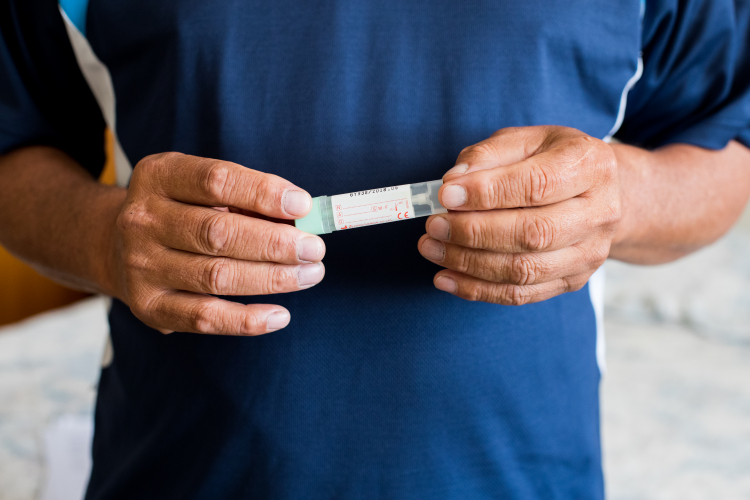
Currently, most people referred by their GP for investigation must undergo a colonoscopy. Under the new approach, patients instead receive a free at-home test – the faecal immunochemical test (FIT) – similar to the national bowel screening test. Results are returned within 14 days and help determine the right care for each patient.

The new pathway was confirmed by the Government as part of Saturday’s announcement on bowel screening expansion. Health Minister Simeon Brown said the FIT for Symptomatic programme is expected to “free up specialist capacity by prioritising colonoscopies for those at highest risk and reducing unnecessary referrals, leading to shorter wait times, faster diagnoses, and more resources to expand screening.”

The FIT for Symptomatic pathway means anyone of any age with bowel symptoms referred for specialist assessment can now quickly check their risk without needing to wait for a colonoscopy.

Three major potential benefits

The new approach is better for patients, for doctors, and for the health system:

  • For patients – More timely reassurance for the majority who test negative, reducing weeks of anxiety and avoiding unnecessary colonoscopies. This enables quicker access for everyone who does need the procedure, and ensures fast-track investigation for those identified to be at greatest risk.
  • For doctors – A quicker, simpler, highly effective tool to investigate symptoms and help rule out bowel cancer.
  • For the health system – Health New Zealand estimates the change has the potential to reduce the number of patients added to colonoscopy waitlists by 30 to 60 percent – a significant increase in capacity that supports both symptomatic patients and the expansion of the screening programme.
  • Patients who test negative but whose symptoms persist beyond six weeks will remain supported through a “safety-net” re-referral process.

Informed by evidence and patient voices

The new pathway was first recommended by a national taskforce of clinical leaders in 2022 and approved by New Zealand’s Clinical Governance Group in late 2024. FIT testing for patients with symptoms has been adopted internationally since 2017, with research showing it is highly effective at ruling out bowel cancer in symptomatic patients. Pilots in Waikato and Waitematā during 2022–23 confirmed the test is safe, effective, and equitable.

BCNZ role and rollout

BCNZ has worked closely with Health New Zealand as they developed this important change, providing feedback on plans and clinical protocols with input from patients and expert medical advisors. The charity has also contributed to the design of patient-centred communications to ensure the pathway reflects real experiences.

The new approach is already operating in Waikato and will be introduced in Counties Manukau, Waitematā, and Hawke’s Bay over the next two months, ahead of a nationwide rollout next year.

Together with the recent lowering of the screening age to 58, this change marks an important shift toward faster, fairer, and more accessible bowel cancer detection across Aotearoa.

What experts say

Dr Sue Crengle, general practitioner and medical advisor to Bowel Cancer New Zealand, said:

“As a practising GP I really welcome this change. We hope to see Health NZ complete this rollout as soon as possible so that from early 2026 accessible and equitable diagnosis is available for people in every community across Aotearoa.”

Peter Huskinson, Chief Executive of Bowel Cancer New Zealand, said:

“This change is an encouraging step forward. Faster reassurance, earlier diagnosis, and shorter waiting lists are all important for patients. We are looking to Health New Zealand to roll out these changes to all districts as soon as feasible. As long as funding for frontline services is maintained, this change will help address long waits for colonoscopy and help enable the Government’s 2023 pledge to match Australia’s screening age to finally be delivered.”

Notes:

  • FIT stands for faecal immunochemical test – a laboratory test which detects microscopic levels of blood in a tiny sample of a patient’s stool (poo).
  • Rollout: Waikato has been operating the new pathway since August 2025, with Waitematā, Counties Manukau, and Hawke’s Bay commencing over the next two months.
  • Under the FIT for Symptomatic pathway, patients with bowel symptoms referred by their GP are offered a FIT test to help assess their risk.
  • Around 80 in every 100 patients will return a negative FIT result and are considered highly unlikely to have bowel cancer. These patients are discharged back to primary care for ongoing management.
  • The test also identifies around 6 in every 100 patients tested as “high positive,” ensuring they can be fast-tracked for urgent colonoscopy. Others with positive findings are listed for colonoscopy within the recommended standard waiting time.
  • Some patients may bypass FIT and be referred directly to colonoscopy or specialist clinics depending on their symptoms.
  • The FIT pathway is expected to reduce the circa 33,000 non-urgent patients added to colonoscopy waitlists each year by 30–60 percent.
  • Almost 63,000 colonoscopies were performed in New Zealand in 2023, including just under 7,000 as part of the National Bowel Screening Programme.
  • The new pathway was recommended by Te Whatu Ora’s Planned Care Taskforce of doctors and health leaders in September 2022.

BCNZ emphasises the importance of:

  • Safety nets: Ensuring patients with ongoing or worsening symptoms after a negative FIT test are re-referred and monitored, to avoid any missed cancers, in line with international guidelines.
  • Equity monitoring: Publishing data on test return rates, pathway completion and outcomes to assure that Māori and Pasifika – who currently face poorer survival rates – are benefiting equally from the change.
  • Future improvements: Making tests available directly from GPs, which patients report would be faster and more convenient, as used in other countries. BCNZ’s 2025 GP survey found 68% of respondents said the test would be “very useful,” 15% “fairly useful,” and only 4% said it would not be useful.
  • Capacity planning: The Government must continue to maintain investment in colonoscopy capacity and workforce each year to meet demand from population growth and rising early-onset bowel cancer. This will ensure the starting age for screening can be reduced to 45 and earlier screening for Māori and Pasifika reinstated by using the freed-up capacity from the FIT symptomatic pathway change.
An important step forward, but bigger changes needed to save lives from bowel cancer2025-10-09T16:18:18+13:00

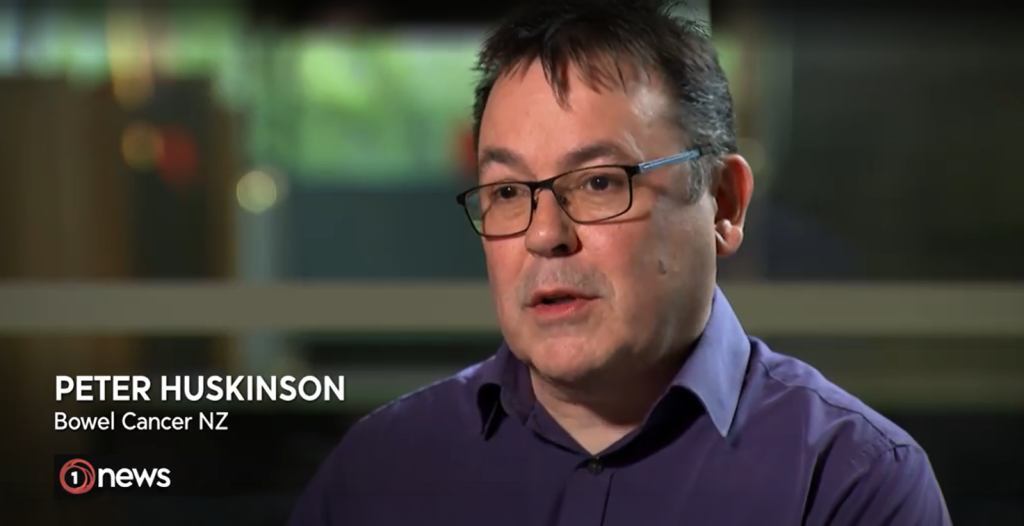
Bowel Cancer New Zealand Chief Executive Peter Huskinson spoke to 1News about the announcement – watch the interview here.

Bowel Cancer New Zealand (BCNZ) has welcomed the Government’s announcement that bowel screening will now be available from age 58, alongside the rollout of a new nationwide FIT for Symptomatic testing pathway – but says further action is needed to catch bowel cancer earlier and save more lives.

Bowel cancer is New Zealand’s second-deadliest cancer, claiming 1,200 lives every year – around 100 every month – despite being 90 percent treatable if caught early.

BCNZ Chief Executive Peter Huskinson says the announcement represents the first building blocks of meaningful progress, but more urgency is needed to match Australia and keep pace with rising early-onset bowel cancer.

“This is a welcome start, but we’ve clearly got to go way further if we’re going to keep pace,” says Huskinson.

“With the rising tide of early-onset bowel cancer, New Zealand is now the fastest-growing early-onset bowel cancer country in the world. This is affecting people in their 30s and 40s in particular – and we have to screen from 45.”

“The key is for the Government to commit to a date to complete the job of getting screening at 45. That way, the health system can plan for it.  Until there is a firm target it remains an aspiration without a plan.”

The new FIT for Symptomatic test is a free, at-home faecal immunochemical test that checks for microscopic traces of blood in a small stool sample – a potential early sign of bowel cancer. It allows anyone of any age who presents with bowel symptoms to quickly assess their risk without having to wait for a colonoscopy.

Findings from a pilot study in two districts of New Zealand showed the FIT test to be highly effective in helping rule out bowel cancer in people with symptoms. It provides faster reassurance for most patients and ensures those at higher risk are prioritised for colonoscopy. The pathway is already operating in Waikato, with rollout to Counties Manukau, Waitematā and Hawke’s Bay from October, and nationwide expansion expected in 2026, as confirmed by the Health Minister.

The FIT for Symptomatic pathway is also expected to reduce colonoscopy demand by up to 60 percent – creating the headroom needed to safely expand screening to younger New Zealanders.

Professor Frank Frizelle, colorectal surgeon and BCNZ medical advisor, says rising rates of bowel cancer among younger New Zealanders highlight why screening must start earlier.

“We’re seeing bowel cancer increase by around 26 percent every decade in people under 50 – and even faster among Māori, at around 35 percent. Screening younger is the best way to address that trend.”

Nearly a third of bowel cancer patients under 75 develop bowel cancer before they reach the current screening age, and for Māori it’s about half.

Huskinson says the combination of the FIT for Symptomatic rollout and the screening-age reduction gives the Government a strong platform to build on – and insists that equity must remain central to implementation.

“The systems are improving – now we need the urgency to match,” says Huskinson.

“With colonoscopy capacity increasing and FIT testing now freeing up specialists, there’s no reason to delay. If we lower the screening age to 45 and ensure earlier access for Māori and Pacific peoples, modelling shows we could catch up to 93 percent of cases before they develop. That’s a once-in-a-generation opportunity to save hundreds of lives.”

BCNZ is also calling for robust “safety-net” systems to ensure anyone whose symptoms persist after a negative test is re-assessed, and for outcomes data to be published to confirm Māori and Pacific peoples are benefiting equally from the change.

BCNZ says it looks forward to working with the Ministry of Health, Te Whatu Ora and the Minister to build capacity and ensure everyone in Aotearoa has timely, equitable access to lifesaving screening and diagnosis.

Government delay is costing lives – experts and families call for bowel screening at 452025-10-09T15:34:50+13:00

Latest episode of ‘Paddy Gower Has Issues’ exposes toll of New Zealand’s outdated screening programme

Bowel Cancer New Zealand (BCNZ) is calling on the Government to urgently lower the national bowel screening age to 45, following the latest episode of Paddy Gower Has Issues.

The programme shone a light on the devastating reality of bowel cancer, centred on the story of Aimee-Rose Yates – a much-loved BCNZ ambassador who died in July 2025, aged just 32. Diagnosed with stage 4 bowel cancer at 29, Aimee-Rose fought fiercely to ensure others would not be told they were “too young” for bowel cancer. In September 2023 on national television at the leaders’ debate she asked Christopher Luxon and Chris Hipkins “if elected will you lower the screening age to match Australia?” Both leaders agreed, with Christopher Luxon describing it as a day one priority.

Her husband Aaron Yates told the programme: “Aimee-Rose asked our leaders for this change, and they promised her. She isn’t here to see it, but I’m determined her fight won’t be in vain.”

Alongside Aaron, the episode also featured bowel cancer surgeon Professor Frank Frizelle – one of New Zealand’s leading experts in early-onset bowel cancer – BCNZ Chief Executive Peter Huskinson, and Cheryl Waaka – a former Black Fern and two-time Rugby World Cup champion from Northland, who is currently facing stage 4 bowel cancer. Together, their voices painted a stark picture of why urgent change is needed.

“New Zealand has one of the highest rates of bowel cancer in the world. It’s our second-deadliest cancer – but it doesn’t have to be. Ninety percent of cases are treatable if caught early,” says Peter Huskinson. “Every month, 300 people are diagnosed and 100 die. Public Health experts at Health New Zealand report that nearly half of those deaths are avoidable – yet our government remains unwilling to commit to any firm plans to meet its pledge.”

Professor Frizelle added: “We are seeing rising numbers under 50, with a third presenting late with advanced and often incurable disease. This changing pattern of disease needs a change in our screening process.”

Cheryl Waaka’s story underscored the reality of younger New Zealanders being diagnosed late, despite being otherwise strong and active. Her journey reflects the human cost of New Zealand’s delayed screening programme.

Promises still unmet

In 2024, a petition led by BCNZ ambassador Rachael Ferguson and signed by 13,000 New Zealanders called for screening to begin at 45. Despite a costed, clinically backed proposal presented to the health minister in March, the Government last month discharged the petition without action – leaving its election pledge to match Australia’s screening age “from day one” still unmet.

This followed the cancellation of a planned rollout of screening for Māori and Pacific peoples aged 50–60, which would have offered protection to more than 100,000 people. Even the Health Minister himself has acknowledged that the move to 58 is only “a step, but not enough.”

Rachael, diagnosed with bowel cancer at just 32, says: “13,000 New Zealanders asked for this change. We gave the government evidence, costs, and accounts of the real-life impact on families – and still nothing has happened. I’m not prepared to sit back and accept continuing delays.”

The case for change

  • Every month 300 Kiwis are diagnosed with bowel cancer and every month 100 people die of the disease– with 45 of those deaths avoidable
  • New Zealand has 410 excess deaths each year compared to Australia, which already screens from 45
  • Matching Australia’s screening age would mean one million more New Zealanders are eligible for screening protection. Current government plans to reduce the age only to 58 addresses just one tenth of this gap – and come at the cost of cancelling protection for 100,000 Māori and Pacific peoples aged 50–60
  • Māori and Pasifika are hardest hit, with significantly poorer survival rates
  • Screening detects cancers far earlier: 4 in 10 screening-detected cancers in New Zealand are Stage 1, compared to just 1 in 10 symptom-detected

A call to action

New ways to investigate people with symptoms to be introduced next month are expected to free up substantial colonoscopy capacity by 2026. Health NZ estimate this change will reduce colonoscopy demand for symptomatic patients by 30–60% – more than enough to enable screening at 45.

Bowel Cancer New Zealand says this creates a real opportunity for New Zealand to close the gap with Australia and save lives – but only if Government commits to a clear timeline for screening at 45. If not, the opportunity may be lost.

“With the evidence in front of us, there is no reason to wait,” says Huskinson. “Screening earlier will save lives, reduce costs, and help close a shameful survival gap faced by Māori and Pacific peoples. What we need now is action.”

BCNZ is asking New Zealanders to:

  • Share the documentary to raise awareness
  • Learn the symptoms of bowel cancer and talk to your GP if something doesn’t feel right
  • Contact your local MP and call for screening at 45 – you can use our letter template here

Get regular updates on this campaign by signing up at bowelcancernz.org.nz